Casino Sites That Accept EcoPayz in Australia: Key Checks
 Available in AU

EcoPayz availability, cashier terms and withdrawal timing do not establish that an offshore casino may lawfully serve people in Australia.
Table of Contents
- Australian Online Pokies and the Limits of the Search
- Deposits, Cashiers and the Missing EcoPayz Details
- Withdrawal Timing Is Not a Payment Guarantee
- What the 2026 Search Can—and Cannot—Establish
- “Best” Depends on Verifiable Payment Terms
- Payment Access Does Not Identify the Games
- Australian Payment Habits, Beyond One Wallet
- Withdrawal Rules Vary by Casino and Method
- Paying with EcoPayz: What Must Be Confirmed
- Online Slots and Payment Acceptance Are Separate Questions
- Payments
Australian Online Pokies and the Limits of the Search
An Australian looking for online pokies that take EcoPayz is asking a payment question inside a legal setting that changes its meaning. The word “Australian” may describe the person, the currency or the intended audience; it does not make an offshore casino an Australian service. Nor does a familiar payment option settle whether the underlying activity is lawful.
The central distinction is between the conduct of an operator and that of a player. Under the Interactive Gambling Act 2001, it is illegal for operators to provide real-money online casino games to people physically located in Australia. The prohibition covers casino-style services such as pokies, poker and table games. It is directed at those providing the service, not framed as an explicit criminal offence for an individual who uses an offshore site.
That distinction is easy to blur in the smooth language of online commerce. A cashier, a mobile-friendly page and an account denominated in Australian dollars can make a distant service feel local. None changes the legal character of offering prohibited interactive gambling to people in Australia. A border may be invisible on a screen; it is not therefore absent from the law.
The Australian Communications and Media Authority, or ACMA, is responsible for enforcing the Act. Its role places online casino activity within a regulatory system that does not permit operators to offer real-money casino games to Australians. This is not a local licensing question with a routine list of approved online casinos at the end of it. Advice to “check the licence” can suggest that a suitable Australian licence is available for this activity. That implication would be misleading.
The law also assigns substantial penalties to breaches. The maximum daily penalty is $360,000 for an individual and $1.8 million for a body corporate. Those figures concern violations of the Act; they do not mean that a player faces those penalties simply for using an offshore casino. The difference matters. Legal warnings lose their value when the conduct, and the person responsible for it, are left vague.
Casino Sites That Accept Osko in Australia: Evidence
There is no explicit criminalisation of players using offshore sites in the Act’s treatment of this issue. That should not be mistaken for a declaration that offshore gambling is safe, authorised or protected. Australian consumer law does not protect players who use offshore casinos. If a dispute concerns an account, a payment or an unpaid balance, the ordinary confidence attached to a domestic consumer transaction may not be available. The distance between a service and its customers can become most visible when something goes wrong.
This is one reason payment acceptance should not be treated as a certificate of legitimacy. A wallet appearing in a cashier would answer, at most, a narrow question about a transaction route at a particular service. It would not establish that the operator may lawfully offer casino games to people in Australia. It would not create the protections associated with a local service. And it would not turn an offshore casino into an Australian one.
Casinos That Accept Apple Pay in Australia
The same caution applies to phrases such as “Australian online casino”. In everyday use, the phrase can refer to a site aimed at Australians, a service that accepts Australian customers, or a business based in Australia. Those meanings are not interchangeable. A website may speak to an Australian audience without being an Australian business, and a service’s willingness to accept customers does not answer whether it is permitted to provide them with real-money casino games.
The law’s focus on operators also helps explain why a person may encounter abundant offshore marketing despite the prohibition. Visibility is not approval. A page appearing in a search, loading on a phone or displaying a familiar brand of payment service does not amount to an official endorsement. The ease of finding a service and the legal status of its offer belong to different questions.
There is a broader social habit at work here: digital services invite people to judge by the cues they know. A payment logo feels like infrastructure; a polished cashier feels like administration; local wording feels like proximity. But the protections attached to a transaction depend on more than the interface. The interface is the least difficult part to make familiar.
Legal Warning
Under the Interactive Gambling Act 2001, it is illegal for operators to provide real-money online casino games to people physically located in Australia.
For Australian residents, the relevant legal frame is therefore not whether an offshore site presents itself as local, or whether a payment method appears in its cashier. It is that the Act prohibits operators from providing real-money online casino games to people physically in Australia, while not explicitly making players’ use of offshore sites a criminal offence. ACMA enforces the Act, and Australian consumer law does not protect people using offshore casinos.
A neat interface is not a local safeguard.
Deposits, Cashiers and the Missing EcoPayz Details
A deposit claim is more than a payment logo on a page. It is a statement about a particular transaction: which account can use the method, what the cashier will accept, and what conditions attach to the transfer. For an Australian searching for a way to pay through EcoPayz, those distinctions matter. A method mentioned in general promotional copy may not appear in the cashier, and a cashier option does not by itself establish the amount, cost or procedure that would apply.
The cashier is where a payment claim becomes concrete. It is the point at which a named method is connected to an account and a proposed deposit, rather than merely placed among a row of familiar-looking symbols. Yet even that display should be read as one part of the terms, not as a complete account of them. The details that matter include whether the method is available to an Australian account, how the transaction is denominated, whether a charge is applied, and what happens if the payment is not accepted. Without those particulars, “accepts EcoPayz” is a broad label, not a usable description of a deposit.
Casino sites that accept BPAY in Australia: what’s known
The appeal of a small deposit threshold is easy to understand. It seems to make the first step modest, and a figure such as ten dollars looks precise enough to compare. Precision, however, can be decorative. A quoted minimum might refer to a different payment method, account location, currency or set of terms; it might also be outdated. A deposit amount only has meaning when attached to the method and conditions under which it applies. The same caution applies to claims about a “best” destination: a low minimum, if established, would not settle questions about fees, eligibility or the rest of the transaction.
Those details are not interchangeable. A payment service may have its own account requirements, while a gambling operator may set separate rules for deposits. A payment can also depend on whether the relevant account is eligible and whether the transaction is accepted. The distinction is plain. The substance is elsewhere.
Account checks form part of that substance. Online gambling operators commonly conduct identity and customer checks before allowing financial activity. This process, often described as Know Your Customer verification, can involve confirming who holds the account and whether its details satisfy the operator’s requirements. A payment method appearing in a cashier therefore does not necessarily mean that an account is immediately cleared to transact. Payment availability and account verification are separate conditions, even when they meet at the same moment on a screen.
KYC Verification
Online gambling operators commonly conduct Know Your Customer (KYC) checks to confirm account holder identity before allowing financial activity.
The order of events can also matter to a deposit claim. A statement that a service accepts EcoPayz should specify whether it describes an option visible before account checks, an option available only after verification, or a general feature of the operator’s payment system. Those are materially different descriptions. A careful account would identify the relevant account jurisdiction and explain the conditions under which the payment option is offered, rather than allowing a broad label to stand in for those details.
Currency deserves the same care. A displayed amount may be denominated differently from the funds held in a payment account, and a quoted figure does not reveal by itself whether conversion or another charge affects the final cost. The transaction terms would need to make clear what currency is used and which party, if any, applies a fee. Without that, a nominal deposit figure may not represent the amount ultimately deducted. No responsible comparison can treat the number on a promotional page as the whole cost.
The Australian setting gives these claims a further edge. The Interactive Gambling Act 2001 prohibits operators from providing real-money online casino games to people physically in Australia, and the Australian Communications and Media Authority enforces that law. Australian consumer law does not protect people who use offshore casinos. Payment language can make an offshore service sound like ordinary retail commerce, but a familiar cashier does not change the legal character of the service or create local consumer protection.
That is why deposit wording should be judged by what it actually establishes. A meaningful statement would identify EcoPayz as an available method for the relevant Australian account and set out the applicable deposit conditions, including amount, currency, fees and any verification requirement. A broad claim that a casino takes EcoPayz does not answer those questions. A tiny figure in a headline does not answer them either. For money, the cashier’s terms matter more than the slogan.
Paysafecard at Australian casino sites: what is verified
Withdrawal Timing Is Not a Payment Guarantee
“Instant” sounds like a description of time, but in payment language it can refer to different stages. A transaction may be approved before the money has completed its journey to an account. A withdrawal also has to be handled by the casino and the payment service; a quick response at one stage does not, by itself, establish when funds will be available at the other end.
That distinction matters for anyone looking for an EcoPayz withdrawal from an Australian-facing casino. Acceptance of a payment method for deposits would not prove that the same method can receive withdrawals, still less that a payout would arrive instantly. Each claim needs its own terms. Combining them into one promise makes a payment route sound more certain than it is.
A specialist review reports that casino withdrawals made through Amex can take up to five days to clear. That is a claim about Amex, not a timetable for EcoPayz. It is also a report from a particular kind of source, rather than a standing rule for every casino or transaction. The useful point is narrow: even when a stated timeframe exists for one method, it cannot be transferred to another by analogy.
Payment services are not interchangeable clocks. A casino may describe an internal processing stage, while a customer is interested in the point when the money can actually be used. Those are not necessarily the same event. A label such as “instant withdrawal” is therefore incomplete unless its terms make clear what has happened instantly, which method is involved and what event marks completion.
Attention: A fast deposit does not establish a fast payout, nor does the presence of EcoPayz in a cashier guarantee a specific withdrawal timeframe.
The word can also blur the difference between a deposit and a withdrawal. Money going into an account and winnings being sent out are separate transactions, with separate conditions. A fast deposit would not establish a fast payout; nor would the presence of EcoPayz in a cashier settle what happens when a withdrawal is requested. The same brand name on both sides of a transaction is not a timing guarantee.
Australian law supplies a more consequential boundary than any payment label. The Interactive Gambling Act 2001 prohibits operators from providing real-money online casino games to people physically in Australia, and the Australian Communications and Media Authority is responsible for enforcing that law. The prohibition is directed at operators; it does not explicitly make the player’s use of an offshore site a criminal offence. But Australian consumer law does not protect people who use offshore casinos. A promised payout time cannot substitute for those protections.
There is a quiet asymmetry here. A payment page can make a transaction appear routine, while the legal and consumer arrangements around an offshore casino remain anything but ordinary. An estimated clearing period, even when attributed to a particular method, describes only a timing claim. It does not establish that a service is lawful to offer in Australia, that a withdrawal will be approved, or that a customer has a local route for resolving a dispute.
For EcoPayz, an “instant” payout should therefore be treated as a claim that needs specific terms behind it, not as a property of the wallet’s name. The wording would need to identify withdrawals, not merely deposits; the relevant casino and payment route; and the event meant by “instant.” Without those distinctions, the label does not tell how quickly funds become accessible.
Trustly casino sites in Australia: checking claims
That caution is not a prediction that a particular payment will be slow. It is a refusal to turn a method name into a stopwatch. A time reported for Amex cannot supply an EcoPayz estimate, and a general promise of speed cannot fill in the details of a particular withdrawal. “Instant” is only as useful as the transaction it describes.
In a market where offshore casino services are prohibited and consumer protections do not follow players across the border, timing language deserves especially careful reading. The attraction of speed is plain; the meaning of the promise should be plainer still. A payout clock and a payment guarantee are different things.
What the 2026 Search Can—and Cannot—Establish
A request for casino sites that accept EcoPayz in Australia in 2026 expresses a payment preference; it does not establish that any particular operator accepts that wallet. A page repeating the phrase, or a payment logo displayed without current terms, is not enough to show that an Australian customer can use the method. Acceptance is a specific claim about an operator’s present arrangements, not a property of the search term.
That distinction matters because payment options are not fixed labels. A method may be shown in general information yet unavailable to a particular customer, or its availability may depend on the operator’s terms. Without current, operator-specific evidence, neither a list nor a ranking can be treated as confirmation. Search visibility is not a cashier record.
Do
- Seek current, operator-specific evidence
- Verify the scope of payment acceptance
Don’t
- Rely on search visibility as a cashier record
- Treat a date in a heading as proof of recent review
The wording can also blur separate meanings. “Accepts EcoPayz” might refer to deposits, withdrawals, or both; it may also be used loosely to suggest that a wallet is supported without stating what transactions are possible. Those are different claims. A statement about one does not establish the other, and a broad payment label cannot settle the detail.
The year in the phrase adds another layer. A result appearing in 2026 may have been written earlier, may describe a different market, or may simply repeat information without showing when it was checked. A date in a heading is not proof of a recent review. Nor does the word “best” supply evidence: it is a judgement that depends on substantiated, comparable terms, not a payment keyword. That is a separate standard from establishing whether acceptance exists at all.
There is also a larger Australian context that search wording cannot erase. Under the Interactive Gambling Act 2001, operators may not provide real-money online casino games to people physically in Australia. The Australian Communications and Media Authority enforces that law. The prohibition concerns operators; it does not make the player’s use of an offshore site a criminal offence. But the absence of player criminal liability is not an endorsement or a consumer safeguard. Australian consumer law does not protect people using offshore casinos.
This legal boundary changes the meaning of a payment claim. A statement that an offshore casino accepts a wallet would not make its service lawful in Australia, establish that the service is accessible, or bring it within Australian consumer protections. Payment compatibility and lawful provision are separate questions. A polished cashier, if one is described, cannot answer the second.
So the central query can identify what someone hopes to find: a casino payment option involving EcoPayz. It cannot, on its own, establish a current operator, the scope of acceptance, or the legal status of the service. Those claims need their own evidence, and they should not be collapsed into a recommendation. The search phrase is a beginning, not a finding.
“Best” Depends on Verifiable Payment Terms
If you’re looking for an Australian casino site that accepts ecoPayz in 2026, check the available payment options and terms directly before depositing. This list gives you a concise reference to the stated details for each operator.
1. Rollero Casino
License: Curacao Gaming Control Board OGL/2023/176/0095 (Hollycorn N.V.)
Rollero Casino is listed with a Curaçao Gaming Control Board licence, OGL/2023/176/0095, held by Hollycorn N.V.
2. WinSpirit Casino
License: Curacao eGaming OGL/2024/923/0383 (Antillephone N.V.) · Min. deposit: A$30
WinSpirit Casino is listed with a Curaçao eGaming licence, OGL/2024/923/0383, held by Antillephone N.V. Its minimum deposit is A$30.
3. Playfina Casino
License: Curacao eGaming (Hollycorn N.V., since 2017) · Min. deposit: A$20-30 (depends on the offer)
Playfina Casino is listed with a Curaçao eGaming licence held by Hollycorn N.V. since 2017. The minimum deposit is A$20–30, depending on the offer.
4. Thor Casino
License: Curacao – Antillephone N.V. (Versus Odds B.V.) · Min. deposit: EUR 20
Thor Casino is listed with a Curaçao licence from Antillephone N.V., with Versus Odds B.V. identified. Its minimum deposit is EUR 20.
5. LevelUp Casino
License: Curacao eGaming OGL/2023/174/0082 (Dama N.V.) · Min. deposit: A$15
LevelUp Casino is listed with a Curaçao eGaming licence, OGL/2023/174/0082, held by Dama N.V. The stated minimum deposit is A$15.
6. Bizzo Casino
License: Curacao Gaming Control Board (TechSolutions Group N.V.)
Bizzo Casino is listed with a Curaçao Gaming Control Board licence held by TechSolutions Group N.V.
7. Lucky Dreams
License: Curacao · Min. deposit: A$20 (POLi)
Lucky Dreams has a Curaçao licence. Its stated minimum deposit is A$20 when using POLi.
8. SpinsUp
License: Curacao Gaming Control Board OGL/2023/174/0082 (Dama N.V.)
SpinsUp is listed with a Curaçao Gaming Control Board licence, OGL/2023/174/0082, held by Dama N.V.
9. Ricky Casino
Payout speed: crypto under 1 hour, PayID 1-3 business days · Min. deposit: A$20 (A$30 to qualify for the bonus)
Ricky Casino lists crypto payouts as taking under 1 hour and PayID payouts as taking 1–3 business days. The minimum deposit is A$20, or A$30 to qualify for the bonus.
10. House of Pokies
License: international iGaming licence – jurisdiction not named in the source · Payout speed: PayID 1-24 hours · Min. deposit: A$30 (PayID from A$10)
House of Pokies is listed with an international iGaming licence, though the jurisdiction is not named in the source. PayID payouts are stated as 1–24 hours; the minimum deposit is A$30, with PayID deposits from A$10.
Calling a payment option “best” sounds like a judgement about convenience. In practice, it is a comparison: whether a method is accepted, what it costs, which transactions it can fund, and whether the terms are clear. Without reliable, current evidence for those points, a ranking would turn a label into a substitute for information.
That matters especially when the proposed distinction is EcoPayz acceptance. A site’s general description of its payment options would not, by itself, establish that EcoPayz is available to Australian customers. Nor would a mention in an old review settle whether the method remains available, or whether it applies to deposits, withdrawals, or both. Those are separate claims, not small print around one broad promise.
Comparable terms are essential, too. A meaningful comparison would need to use the same measures across the services being assessed: payment availability, fees, transaction limits, and the rules governing withdrawals. If one service has documented terms and another has only a passing reference to EcoPayz, placing them side by side would create the appearance of a fair test without the substance. A neat list can make uncertainty look unusually well organised.
Payment Comparisons
- Use same measures across services: availability, fees, and limits
- Distinguish between documented terms and passing references
- Avoid treating “best” labels as findings on safety or legality
Bonuses do not repair that gap. A promotion described as an EcoPayz bonus would need to be tied to clear eligibility and payment conditions; the word “bonus” alone says nothing about whether a particular payment method qualifies. Promotional language can make a service sound more attractive while leaving the relevant transaction terms unresolved. It is a poor measuring instrument.
There is also a legal boundary that changes how any recommendation should be read. Under the Interactive Gambling Act 2001, operators cannot provide real-money online casino games to people physically in Australia. The Australian Communications and Media Authority enforces the Act. Players are not criminally liable merely for using an offshore site, but Australian consumer law does not protect people who use offshore casinos. The absence of player liability is not an endorsement, and it does not create the protections that a local consumer relationship would provide.
For that reason, a “best” label should not be treated as a finding about safety, legality, or suitability. At most, a defensible comparison would describe specific, independently checkable payment terms and make their limits plain. Where acceptance itself cannot be established, no operator can responsibly be singled out as the best EcoPayz choice for Australia. The honest result is not a ranking with a cautious disclaimer attached; it is a refusal to turn an unconfirmed claim into a recommendation.
The distinction may seem fussy. Payment language is often designed to make it disappear.
Payment Access Does Not Identify the Games
A payment method and a game catalogue answer different questions. EcoPayz, where accepted, would describe a way to move funds; it would not identify what an operator makes available, how those products are classified, or whether they can lawfully be offered to people in Australia. Treating payment access as a guide to the games is a category error.
Skrill for Australian Casino Sites: What Can Be Verified
That distinction matters because a cashier is not a catalogue. A payment option says something about a transaction route, not the content on the other side of it. A label such as “games using EcoPayz” can sound as though the wallet unlocks a particular set of play, but the payment method alone cannot establish that. Nor can it establish that any named game is connected to EcoPayz acceptance.
Australia’s legal position sets a harder boundary than a payment menu. The Interactive Gambling Act 2001 bars operators from supplying real-money online casino-style services to people in Australia, including services involving familiar table and card formats. The Australian Communications and Media Authority is responsible for enforcing that law. The relevant distinction is not which wallet appears at checkout, but whether the service may be supplied here at all.
There is also a consumer-protection consequence. Australian consumer law does not protect people who use offshore casinos. A payment route does not alter that exposure, and it should not be mistaken for evidence of local approval or oversight. The mechanism may look ordinary; the legal setting is not.
This is why descriptions that tie EcoPayz to a particular kind of game need more than a payment label. They would need reliable, current information about the operator’s offerings and the terms attached to them. Without that separation, a discussion of casino payment options can quietly turn into an unsupported claim about entertainment or availability. The wallet is not the game. Nor is it permission.
Wallet vs Game
Payment access is not evidence of a particular game, and a game listing is not proof of lawful availability in Australia.
Australian Payment Habits, Beyond One Wallet
Australian daily commerce is built around a choice of payment routes rather than loyalty to a single format. Contactless credit and debit cards are accepted almost everywhere, making a brief tap an ordinary part of buying groceries, catching up over coffee or handling other routine purchases. That familiarity belongs to everyday commerce; it does not make every kind of transaction permissible or available.
Mobile wallets have also become part of that routine. Google Pay and Apple Pay are accepted almost everywhere in Australia, so paying with a phone can feel as unremarkable as using a card. The technology changes the gesture, not the underlying question of whether a particular service may lawfully be offered. A payment option familiar in shops is not evidence that it can be used for online casino gambling.
Australians are comfortable moving between cards, mobile wallets and services connected to bank accounts, such as PayPal. That flexibility reflects the way people adapt to different settings: convenience, familiarity and the nature of a purchase all shape the choice. It does not establish that EcoPayz is accepted by an Australian casino, or that an offshore gambling service is lawful for Australian residents.
Casinos That Accept PayPal in Australia: What to Know
That distinction matters because the Interactive Gambling Act 2001 prohibits operators from providing real-money online casino games to people in Australia. The convenience of a payment method cannot soften that rule. Nor does it turn the consumer protections attached to ordinary domestic purchases into protection for people using offshore casinos. Australian consumer law does not protect players who use them.
The spread of contactless payments and phone wallets says something about the country’s everyday habits: payment has become less visible, and switching between familiar services is easy. But ease of payment is not a map of what is legally available. An EcoPayz-related payment question sits apart from the wider comfort with cards, wallets and bank-linked services. Everyday familiarity is not authorisation.
Withdrawal Rules Vary by Casino and Method
A payment method appearing in a cashier for deposits does not establish that the same method can receive withdrawals. The two directions of a transaction may be governed by different conditions, so an EcoPayz deposit option alone would not demonstrate that winnings can be sent to an EcoPayz account. Nor does the word “withdrawal” beside a payment brand settle the question: the relevant terms are those that apply to the particular transaction and account.
A specialist review has reported that not every Australian-facing casino allows withdrawals to Amex. That is a qualified observation about Amex, not a rule that can be transferred to EcoPayz or treated as a permanent description of the market. The same kind of review notes that Amex deposit and withdrawal limits are determined by individual casinos and can differ. Such limits are not EcoPayz terms.
The distinction matters because a payment label can make a cashier look simpler than the underlying arrangement. A deposit may be accepted while a withdrawal through that route is unavailable; separate conditions may also apply to the amount or processing of a withdrawal. Without terms specifically addressing EcoPayz withdrawals, neither the presence of EcoPayz at deposit nor a statement about another payment method answers whether an online casino will pay out through it.
Attention: A deposit route is not a withdrawal promise; separate conditions often apply to the amount or processing of a withdrawal.
Australian law adds a more consequential boundary. Under the Interactive Gambling Act 2001, operators may not provide real-money online casino games to people in Australia. The Australian Communications and Media Authority enforces the Act. Australian consumer law does not protect people using offshore casinos, so a payment dispute with such an operator does not come with the protections available for ordinary domestic commerce.
That is the distinction to keep in view: a deposit route is not a withdrawal promise, and a payment-method label is not a safeguard. The terms can differ.
Paying with EcoPayz: What Must Be Confirmed
A payment method is not established by a logo, an old review or a general claim that a casino accepts e-wallets. For EcoPayz, the relevant evidence would be a current cashier entry and terms that apply to Australian customers. Those details need to identify whether the method is available for the transaction in question, rather than merely appearing in a list of possible options.
The distinction matters because a payment route has several separate conditions. The cashier would need to show whether EcoPayz can be selected, what currency is used, and whether the operator sets a minimum or maximum transaction value. Any fee, exchange conversion or restriction tied to the account would also need to be stated before a payment is made. None should be inferred from another wallet’s terms.
Deposit access is only one part of the arrangement. The operator’s rules would also need to clarify whether funds can be returned through EcoPayz, whether a different method is required, and what identity checks apply before a transaction is processed. Online casinos typically require customers to complete Know Your Customer checks before financial transactions; the timing and scope of those checks are not payment-method features.
Casinos That Accept PayID in Australia: What to Check
A cashier can change, and a payment provider’s availability does not settle whether a particular operator accepts a transaction. The practical standard is current, operator-specific wording that covers the method, fees, currency, limits and withdrawal conditions. If those points are unclear or inconsistent, acceptance should not be treated as confirmed.
There is a larger boundary around the payment question. The Interactive Gambling Act 2001 prohibits operators from providing real-money online casino games to people in Australia. The Australian Communications and Media Authority enforces the law, and Australian consumer law does not protect people who use offshore casinos. Payment information cannot remove that legal and consumer-protection risk.
Online Slots and Payment Acceptance Are Separate Questions
A payment label and a game catalogue answer different questions. Even if a cashier displayed EcoPayz, that would not establish which games were offered, whether a particular title could be accessed, or whether the service was lawful for people in Australia.
That distinction matters because the legal framework is not a consumer endorsement. Under the Interactive Gambling Act 2001, operators are prohibited from providing real-money online casino games, including slots, to people physically in Australia. The Australian Communications and Media Authority enforces the Act. The restriction concerns the service offered to Australians, not a technical feature of a payment method.
Offshore sites may present themselves as reachable, but access does not create local consumer protection. Australian consumer law does not protect people using offshore casinos, and the absence of player liability for using such a site does not make the operator’s service lawful. A wallet name on a payment page cannot change that arrangement.
The vocabulary of online entertainment can make the boundary seem smaller than it is: a game appears as a tile, a balance as a number, and a payment option as a button. Yet those interfaces do not settle what is permitted or what protections apply. Payment access is not evidence of a particular game, and a game listing is not proof of lawful availability in Australia.
Separate questions.
What are the deposit and withdrawal limits at the best Amex casinos?
Limits are set by each casino and can vary. Check the casino’s cashier for the limits that apply to your account.
Which online casinos accept American Express for deposits?
Jackpot City Casino, Spin Palace and Ruby Fortune are among the Australian gambling sites listed as accepting Amex. Ignition Casino, Joe Fortune and PlayAmo are also listed as supporting Amex deposits.
Are there any fees associated with using American Express at online casinos?
Amex gambling transactions are generally free, but a casino may add a 1.5% surcharge, and card currency conversion can incur a 3% fee. Withdrawal fees may also apply, depending on the casino.
Are there any limits on how much I can deposit or withdraw using American Express?
Yes. Each casino sets its own Amex deposit and withdrawal limits, so check the limits shown in its cashier. Some casinos may not allow withdrawals to Amex.
Why does my Amex deposit get declined at some casinos but not others?
Amex may block payments to a particular website, and Australian banks may block gambling-related Amex transactions. Acceptance also varies between casinos.
Can you use an American Express gift card at an online casino?
Yes, at casinos that accept American Express, but gift cards can be used for deposits only, not withdrawals.
Payments

Anonymous Crypto Casinos in Australia: Fees and Access
Bitcoin and other crypto options bring payment, privacy and access trade-offs for Australian casino users....

Aristocrat Online Pokies in Australia: What’s Verifiable
Brand names and casino listings alone do not establish a game's origin, online availability, or...

Aussie Crypto Casinos: Payments, Risks and Rules
A practical look at payment choices, operator boundaries, promotional terms and the limits of claims...

New Australian Online Pokies: Legal and Payment Checks
A practical look at legal limits, verification, bonus conditions and payment issues surrounding offshore real-money...

Online Casino Payment Methods for Australian Players
Payment options differ in how deposits are accepted, withdrawals are handled and funds move between...

Online pokies in Australia: what “best-paying” means
A practical guide to interpreting payout claims, distinguishing free play from real-money play, and understanding...

Bitcoin Pokies in Australia: Payments and Risks
Bitcoin is a payment method, not a feature that defines a game's software or outcome;...

Casino Sites That Accept Amex in Australia
Amex availability can depend on the casino, payment provider, card issuer and transaction, while withdrawals...

Casino sites that accept BPAY in Australia: what’s known
Australian payment language does not establish that a casino is locally authorised or that BPAY...

Australian casino sites that accept credit cards
Card acceptance can enable a deposit, but it does not establish that an offshore casino...

Casino Sites That Accept Osko in Australia: Evidence
The article distinguishes Australian casino terminology from payment evidence, including why a search phrase alone...
Paysafecard at Australian casino sites: what is verified
Mentions of Australian pokies, local payment preferences and cashier options do not by themselves establish...

Skrill for Australian Casino Sites: What Can Be Verified
Skrill acceptance is specific to an operator and transaction, while Australian rules place responsibility for...

Trustly casino sites in Australia: checking claims
Everyday payment habits and a Trustly label do not, on their own, confirm that a...

Under-an-hour casino withdrawals in Australia
PayID can move a released payment promptly, but the casino’s review and decision to release...

No-Verification Casino Withdrawals in Australia
Registration claims do not settle cashout rules: identity checks, payment processing and bonus conditions can...

Casinos That Accept Apple Pay in Australia
Australian contactless habits do not establish which online casinos accept Apple Pay or what their...

Casinos That Accept Bitcoin in Australia: Rules & Risks
Bitcoin can change how deposits and withdrawals work, but it does not make an offshore...

Casinos accepting Bitcoin Cash in Australia: a guide
BCH is a payment method, not a legal exemption; offshore access, game availability and withdrawal...

CashtoCode Casinos in Australia: What Can Be Verified
The Interactive Gambling Act 2001 bars operators from offering online casino games to people in...

Casinos That Accept Ethereum in Australia: What’s Verifiable
Ethereum may offer fast, low-fee transfers in general, but that does not confirm availability or...
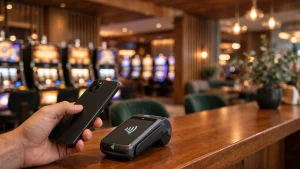
Casinos That Accept Google Pay in Australia
Familiarity with mobile wallets does not prove an online casino accepts Google Pay or supports...

Casinos That Accept Litecoin in Australia: Legal Limits
The law, payment claims and account checks are considered separately, since accepting Litecoin does not...

Casinos That Accept Mastercard in Australia
Everyday card use in Australia does not establish which online casinos accept Mastercard or whether...

Casinos That Accept MiFinity in Australia: What to Know
Payment acceptance cannot establish whether an offshore casino may legally offer real-money games to people...

Casinos That Accept Neosurf in Australia: What to Check
A search result or casino label alone cannot establish Neosurf availability, permitted use, or withdrawal...

Casinos That Accept Neteller in Australia: What to Know
A careful look at how Neteller, pokies, Australian audiences, deposits, withdrawals and bonus claims are...

Casinos That Accept PayID in Australia: What to Check
The article examines the limits of evidence on PayID acceptance, deposits and withdrawals at casino...

Casinos That Accept PayPal in Australia: What to Know
PayPal availability, withdrawal options and a site's legal status are separate questions when assessing Australian-facing...

Casinos That Accept POLi in Australia: Legal Limits
Payment-menu claims do not establish legality, and the available evidence does not confirm whether casinos...

Casinos That Accept Tether USDT in Australia
The article distinguishes general crypto-payment claims from what is known about Tether, casino terms and...

Casinos That Accept Visa in Australia: What to Know
Visa's everyday use in Australia does not establish casino acceptance, withdrawal processing, or the legality...

Dragon Link Online Pokies in Australia: Bitcoin Context
A pokie describes a digital slot game, while Bitcoin describes a payment method; the name...

Easy Withdrawal Casinos in Australia: How Payouts Work
Withdrawal speed depends on operator approval as well as the payment method, and Australian law...

Fast Withdrawal Casinos in Australia: Payment Routes
Withdrawal timing depends on casino processing as well as the payment network, while limits, fees...

Instant Bank Transfer Casinos in Australia
Bank transfer options can differ in how they fund an account, handle withdrawals and fit...

Real-Money PayID Withdrawals in Australia: How Fast?
PayID can move bank-to-bank payments in real time, but the operator must release a withdrawal...

Instant PayID Withdrawals in Australia: How They Work
PayID can move released funds in real time, but casino reviews, first withdrawals and wagering...

PayID Pokies in Australia: Payments and Legal Context
The guide distinguishes payment mechanics from legality and explains deposits, withdrawals, limits and bonus conditions...

No-KYC Casinos in Australia: Checks and Payouts
The label may describe signup, but it does not rule out identity checks when a...

Online Pokies Instant Withdrawals in Australia
A withdrawal depends on operator checks and release as well as the speed of the...

Online Pokies PayID in Australia: How Payments Work
PayID is an identifier used through the New Payments Platform, but acceptance alone does not...

Pay by Phone Casinos in Australia: PayID Explained
The guide distinguishes carrier-billed charges from bank payments and explains why payment approval, bonuses and...

Quick Casino Withdrawals in Australia: How They Work
Payment speed depends on the transfer method, casino terms, identity checks and whether a deposit...

Real Cash Online Pokies in Australia: Bitcoin Play
Bitcoin changes how deposits are made, but game credits, bonus terms and offshore protections determine...

Safe Online Pokies in Australia: What Safety Means
The guide separates account and payment safeguards from legal status, and explains Bitcoin transfers, offshore...

Same-Day Casino Payouts in Australia: The Process
A withdrawal moves through operator checks and payment rails, so “same day” may describe release...

Solana Casino Comparison for Australia
Follow the exchange-to-wallet path and assess legal uncertainty, bonus terms, token exposure and withdrawal conditions....