Offshore Casinos for Australian Players: What to Know
 Available in AU

A practical guide to mobile access, licensing, Australian rules and the payment and bonus conditions that can affect offshore casino play.
Table of Contents
- How Offshore Casino Play Reaches Australian Phones
- Casino Sites, Licences and the Limits of a Label
- Why “Offshore Casino USA” Is Not an Australian Shortcut
- The Australian Rules Behind Offshore Casino Access
- What a 2026 Offshore Casino Guide Can—and Cannot—Recommend
- Comparing Offshore Casino Claims Without a Top-Site Roll Call
- Deposits and Withdrawals: The Australian Payment Friction
- A No-Deposit Bonus Still Comes with Conditions
- Crypto at Offshore Casinos: Speed Is Not the Whole Story
- Online Casinos
How Offshore Casino Play Reaches Australian Phones
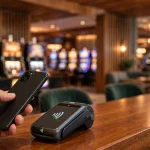
For an Australian phone, the usual route to a mobile casino interface is a browser. The website opens much as other websites do, and the account used on a phone is generally the same one used on desktop. There is no separate mobile identity to maintain merely because the screen is smaller.
That arrangement helps explain why a dedicated app is often absent. Casino apps are rarely listed in the Australian Google Play Store or Apple App Store, so browser access is the ordinary format. A site may still be designed for a phone, with controls and pages arranged for a narrow screen, without being an app downloaded from either store. The distinction is less about what the screen looks like than about where the software comes from and how it is opened.
A browser session begins with a website address. From there, the site’s pages appear within the browser, and the punter moves between them in the familiar way: tapping links, menus and account controls. A mobile layout can resemble an app closely enough that the distinction becomes easy to overlook. But a page that fills the screen is still a page; appearance is not proof that a native app has been installed.
Choosing an offshore casino as an Australian player calls for a careful look at the details available for each operator. This list offers a concise starting point, with each verdict limited to the information provided.
1. Rollero Casino
License: Curacao Gaming Control Board OGL/2023/176/0095 (Hollycorn N.V.)
Rollero Casino is listed with a Curacao Gaming Control Board licence, OGL/2023/176/0095, held by Hollycorn N.V.
2. WinSpirit Casino
License: Curacao eGaming OGL/2024/923/0383 (Antillephone N.V.) · Min. deposit: A$30
WinSpirit Casino is listed with a Curacao eGaming licence, OGL/2024/923/0383, held by Antillephone N.V. Its minimum deposit is A$30.
3. Playfina Casino
License: Curacao eGaming (Hollycorn N.V., since 2017) · Min. deposit: A$20-30 (depends on the offer)
Playfina Casino is listed with a Curacao eGaming licence held by Hollycorn N.V., which has held it since 2017. The minimum deposit is A$20–30, depending on the offer.
4. Thor Casino
License: Curacao – Antillephone N.V. (Versus Odds B.V.) · Min. deposit: EUR 20
Thor Casino is listed with a Curacao licence from Antillephone N.V., with Versus Odds B.V. named. Its minimum deposit is EUR 20.
5. LevelUp Casino
License: Curacao eGaming OGL/2023/174/0082 (Dama N.V.) · Min. deposit: A$15
LevelUp Casino is listed with a Curacao eGaming licence, OGL/2023/174/0082, held by Dama N.V. Its minimum deposit is A$15.
6. Bizzo Casino
License: Curacao Gaming Control Board (TechSolutions Group N.V.)
Bizzo Casino is listed with a Curacao Gaming Control Board licence, with TechSolutions Group N.V. named.
7. Lucky Dreams
License: Curacao · Min. deposit: A$20 (POLi)
Lucky Dreams is listed as Curacao-licensed. Its minimum deposit is A$20 using POLi.
8. SpinsUp
License: Curacao Gaming Control Board OGL/2023/174/0082 (Dama N.V.)
SpinsUp is listed with a Curacao Gaming Control Board licence, OGL/2023/174/0082, held by Dama N.V.
9. Ricky Casino
Payout speed: crypto under 1 hour, PayID 1-3 business days · Min. deposit: A$20 (A$30 to qualify for the bonus)
Ricky Casino lists crypto payouts as taking under 1 hour and PayID payouts as taking 1–3 business days. The minimum deposit is A$20, or A$30 to qualify for the bonus.
10. House of Pokies
License: international iGaming licence – jurisdiction not named in the source · Payout speed: PayID 1-24 hours · Min. deposit: A$30 (PayID from A$10)
House of Pokies is listed with an international iGaming licence, though the jurisdiction is not named in the source. PayID payouts are listed as taking 1–24 hours; the minimum deposit is A$30, or A$10 when using PayID.
This matters in the offshore setting because a polished mobile interface can make an operation feel as ordinary as a familiar phone service. The same visual language—icons, buttons, compact menus—does not make the underlying service local, nor does it turn a website into software distributed by an app store. The phone is simply the latest place from which a website can be reached. Its smallness changes the experience, not the nature of the route.
A website with an app-like shortcut
Some casino websites offer a Progressive Web App, usually shortened to PWA. It is a shortcut to the website that behaves more like a native app on a mobile device. Rather than finding it in an app store, the user can install it from the casino website itself: an install or add-to-home-screen prompt appears, and confirming it places the shortcut on the phone.
The sequence is brief, but the distinction is worth keeping. A PWA does not become an app-store download simply because its icon sits beside other icons on the home screen. It remains connected to the website from which it was installed. Opening the shortcut gives the site a more app-like entrance, while the browser remains part of the route behind it.
That can make repeated visits feel less like opening a web page and more like launching an app. It does not create a different account: the mobile browser and desktop site use the same account. Nor does the shortcut, by itself, say anything about the status or reliability of the operator. A tidy icon is a small piece of interface design, not a certificate.
Online Casinos in Australia: Bonus Wagering Explained
The practical choice is therefore between opening the website in a mobile browser and adding its PWA shortcut, where one is offered. Browser access leaves the address and page in the browser’s ordinary setting. A PWA gives the website a more direct place on the home screen. Neither route changes what the site is. The shortcut saves a step; it does not settle larger questions about the service.
The app-store lookalike
Social and free-play casino apps belong to a different category. They use virtual credits rather than real-money gambling and are available directly through the Google Play Store and Apple App Store in Australia. Their presence in a store can make the word “casino” seem to describe one continuous product family, but the payment and play model separates them from real-money websites.
A free-play app can borrow the familiar visual conventions of casino play while keeping activity within a virtual-credit system. An offshore website, by contrast, may provide real-money casino-style play through a browser or PWA. The shared vocabulary and similar screens can blur the line; the route of installation does not. Store availability applies to the social and free-play category described here, not automatically to every service using casino imagery.
This is why a search on a phone can produce results that look alike but lead to unlike experiences. One may be a store-listed game built around virtual credits; another may be a website opened in a browser; a third may be a website shortcut installed as a PWA. The phone makes all three fit in the same palm. It does not make them interchangeable.
A Progressive Web App (PWA) is a website shortcut that behaves like a native app but remains connected to the original website rather than being downloaded from an app store.
The app-like surface is persuasive. The underlying route still matters.
Casino Sites, Licences and the Limits of a Label
“Offshore” sounds like a place, but on a casino website it is better understood as a clue about where the business is based and which authority, if any, oversees its operation. The word does not describe one uniform kind of company. It can cover sites with different corporate arrangements, licensing jurisdictions and ways of handling disputes. From a phone screen, those differences may be reduced to a footer line and a badge.
That compression is convenient for the site. It is less useful to the person trying to understand what the label means. A casino’s location, the jurisdiction named on its licence and the countries from which it accepts customers are related matters, but they are not interchangeable. A site can be organised in one place, licensed in another and visible from somewhere else entirely. The internet is excellent at making distance look like a minor detail.
For Australian audiences, the phrase “offshore casino” often refers to a real-money site operating outside the country and accepting, or appearing to accept, people located there. The wording can suggest a single category with shared standards. In practice, it mostly describes a cross-border arrangement. The label alone says little about how carefully a particular operator handles accounts, complaints or withdrawals.
International Casinos for Australian Players: What to Check
What a licence identifies
A licence is a regulatory instrument issued within a particular jurisdiction. It can identify the authority under whose framework an operator says it works. Curaçao, the Malta Gaming Authority (MGA) and Gibraltar are among the licensing jurisdictions associated with casinos that accept Australian players. Their names appear in a landscape where the operator’s business and the customer’s location may be separated by considerable distance.
That detail matters, but it should not be asked to do more than it can. A licence is not a promise that every customer will have a smooth experience, nor does its presence settle every question about the operator’s conduct. It also does not turn a cross-border business into a local one. The meaning of a licence depends on the authority named, the scope of the permission and the operator covered by it—not on the visual confidence of a seal in a website footer.
The difference between a badge and a meaningful claim is therefore a matter of specificity. The relevant questions concern which entity is named, which licensing authority is identified and whether the site’s own terms point to the same arrangement. A logo without a clear account of its connection to the operating company is decoration. The internet has never suffered from a shortage of decoration.
Novomatic online casinos in Australia: what to check
There is another complication: the word “licensed” can sound like a universal status, as if a company either has it or does not. In reality, licensing is tied to a jurisdiction and its rules. A foreign licence describes a relationship with that jurisdiction; it does not automatically explain what protections or complaint routes apply to someone elsewhere. A punter looking at a site from Australia is dealing with a service whose important institutional connections may sit outside the country.
This is why the phrase “offshore casino licence” can obscure as much as it clarifies. It points towards an authority, but not necessarily towards the practical experience of a customer trying to resolve a disagreement. A document can establish that a regulator has granted permission within its own system. It cannot, by its name alone, tell a distant customer how easy it will be to obtain a response, how a disputed account will be assessed or what happens if the operator refuses to pay winnings.
A licence badge in a website footer is not a guarantee of a smooth experience or a certificate of local status; it merely identifies the authority under whose framework an operator claims to work.
The gap between permission and confidence
Licensing is often presented as a shortcut to trust. The shortcut is understandable: an independent authority sounds more reassuring than a company making claims about itself. Yet trust is not transferred whole from regulator to operator. It still depends on the specific company, the terms governing the account and the way the operator behaves when something goes wrong.
The arrangement can be especially opaque when the website’s public-facing brand is not the same name as the legal entity in its terms. A familiar brand may sit over a less visible company structure. That is not, by itself, proof of misconduct; it is a reason not to treat branding as a substitute for identifying the business. The names and relationships matter because any complaint begins with knowing which company made the relevant decision.
A site’s rules can also tell a different story from its promotional language. Terms governing account verification, withdrawals, restricted locations and dispute handling shape the practical relationship. A licence badge may occupy the most visible corner of the page; the clauses that matter during a disagreement are usually less theatrical. Confidence built from a logo alone is confidence with a short memory.
The distinction is not between “good” and “bad” jurisdictions in the abstract. Such rankings would flatten different regulatory systems into a single score and imply a certainty that a place name cannot supply. The more useful distinction is between a specific, verifiable licensing claim and a vague one. If an operator names no authority, or leaves unclear which company holds the permission, the uncertainty is part of the picture. If it names one, the name is a starting point rather than a verdict.
Android Casino Apps in Australia: A Legal Guide
Nor does a licence remove the distance between an operator and an Australian customer. In a domestic service, familiar institutions may be closer to the transaction. In an offshore arrangement, the company, regulator, payment route and customer can occupy different jurisdictions. That distance can complicate accountability even where a site presents its licensing details clearly. Paper travels easily. Remedies do not always travel with it.
For an offshore crypto-friendly casino, the same caution applies. The presence of cryptocurrency as a payment option does not establish that the operator is more secure, more transparent or more likely to honour a withdrawal. It describes a payment route, not a standard of conduct. A site may use the language of innovation while relying on familiar corporate structures and conventional terms. The novelty is often in the checkout.
A label is not a guarantee
The phrase “best offshore casino” invites a tidy answer: a short ranking, a badge beside each name, and a sense that the hardest judgment has been made. But a ranking can combine unlike things. One site may be easier to navigate; another may publish its company and licensing details more clearly. Neither observation, on its own, settles the question of how the operator would handle a contested account.
A guide can compare claims without turning them into guarantees. It can distinguish a named licensing authority from a bare assertion, and a stated operating company from a brand with no obvious corporate identity. It can also make clear that a recommendation in this category concerns offshore and crypto-friendly services, not a local form of protection. The distinction is consequential, not stylistic.
No Australian Redress
If an offshore casino refuses to pay winnings, there is no Australian government body available to hear the complaint or compel payment.
Location is part of that distinction. Before depositing, a punter must confirm that the site accepts people in their location. A page loading on a phone does not prove that the operator permits registration from that place, and an account created successfully does not settle what the terms say about later access. A site’s willingness to display a page is not the same thing as a clear permission to use its services.
Using a VPN to reach a casino that blocks access may breach the operator’s terms. It can lead to account closure and winnings being voided. A change in apparent location does not change the underlying account relationship; it can instead make that relationship more difficult to explain when a dispute arises. The technical workaround is not a legal or contractual solution.
The same separation between appearance and substance applies to casino apps. Sideloaded apps carry security risks, and their safety depends on the operator. An app icon can make a website feel settled and familiar, but familiarity is not a security assessment. A PWA, by contrast, is a shortcut to a website rather than proof of a locally supervised service. The format says how the site is reached, not how disputes will be resolved.
The hardest limit of an offshore licence is revealed when a customer wants a remedy. If an offshore casino refuses to pay winnings, there is no Australian government body to complain to about that refusal. A foreign licensing framework may provide its own procedures, but the existence of a regulator’s name on a page should not be mistaken for an Australian avenue of redress. The customer may be left dealing with the operator and whatever process its licensing jurisdiction makes available.
Booongo Online Casinos in Australia: What to Check
That is the central meaning of “offshore”: not simply a casino website beyond a border, but a relationship in which the company, its regulator and its customers may be separated by borders. Curaçao, the MGA and Gibraltar are recognisable names in this landscape, yet recognition is not the same as protection. A licence can identify where an operator claims oversight. It cannot, by itself, close the distance between a customer and a company that declines to pay.
Distance remains.
Why “Offshore Casino USA” Is Not an Australian Shortcut
A casino described as offshore may sound as though its location settles the question of who it serves. It does not. “Offshore” points to an operating base outside the player’s country; it says little by itself about the places where the operator offers its services. A site associated with the United States, or described as an offshore casino for American customers, does not thereby become an Australian service—or a lawful one for Australian operators to provide.
The distinction matters because online services cross borders more readily than the rules governing them. A website can be hosted, managed or licensed elsewhere while still being directed at people in Australia. The relevant Australian question is not whether a casino has a US-sounding identity, an American-facing label or an address beyond the country. It is whether an operator is offering online casino-style games to people located in Australia.
The Interactive Gambling Act 2001 prohibits operators from offering real-money online casino games to people in Australia, regardless of the operator’s branding or national identity.
The Interactive Gambling Act 2001 prohibits gambling operators from offering those games to users in Australia. That boundary concerns the operator’s conduct. It does not turn on a page’s branding, the currency displayed or the national flavour of its design. A United States reference is no legal shortcut; nor does it alter the Australian setting in which the service is encountered.
This is where the language of offshore casinos can become slippery. In ordinary usage, “offshore” often suggests distance from local rules, as if geography were a kind of protective cloak. In practice, the word is a description, not a permission. A foreign base does not erase the fact that a service may be offered to someone in Australia. The border is not a magic trick.
The other side of the distinction is the individual. Under the same Act, an Australian individual is not committing an offence merely by playing at an offshore mobile casino. That is a narrower statement than an endorsement. It does not make the operator’s offer lawful, certify a site, or promise that a player will be protected if a dispute arises. It separates two legal positions that are often blurred together: the restriction on operators and the absence of a corresponding offence for the individual player.
That separation can sound counterintuitive. People tend to assume that if a service is prohibited, everyone connected to it must be breaking the same rule. Australian law draws a different line here. An operator offering casino-style games to people in Australia is on one side of it; an individual playing at an offshore service is on the other. The distinction is about responsibility, not a declaration that the service is safe or officially approved.
Curaçao Casino Licences for Australian Players
A US reference can also be mistaken for a clue about the person a site is meant to serve. Yet a label such as “US offshore casino” may describe a business identity, a market-facing style or simply the wording used to distinguish one kind of site from another. Without more, it cannot establish that the service accepts people located in Australia. Nor can it settle whether the operator is permitted to offer casino games to them.
The same caution applies in reverse. A site described as Australian-facing is not thereby an Australian-licensed casino, and the phrase “offshore casino Australia” does not identify a distinct legal category. It combines a location for the customer with a location or identity for the business. Those are different facts. Treating them as one can make a search label appear more informative than it is.
For Australian readers, the practical point is not to translate an American label into a local assurance. A casino’s stated connection to the United States says nothing conclusive about whether its service is available to people in Australia, and availability itself is not the same as lawful provision by the operator. The geographic wording can be useful as a description, but it cannot do the work of a legal analysis.
The phrase offshore crypto-friendly casino carries the same limitation: it describes a type of service and a payment orientation, not a finding that the service is authorised for Australians. Labels travel cheaply. Legal responsibility does not.
The Australian Rules Behind Offshore Casino Access
The legal boundary in Australia falls first on the operator. Under the Interactive Gambling Act 2001, it is illegal to provide real-money online casino games to people physically located in Australia. The rule covers casino-style services such as poker, blackjack, roulette and pokies. A business being based overseas does not make the service lawful to offer to someone in Australia.
Do
- Understand that individuals are not committing an offence by playing at an offshore casino
- Recognize that the ACMA blocks illegal gambling sites as a practical intervention
Don’t
- Assume a reachable site has been approved by Australian authorities
- Mistake a prohibition on supply for a prohibition on the individual customer
That distinction matters when the phrase “offshore casino” is used as though it described a separate legal category. It describes a service operating from outside Australia, not an exemption from Australian rules. The law targets operators that provide prohibited interactive gambling services here; it does not make an individual punter’s act of playing at an offshore casino a criminal offence under the Act. A prohibition on supply is not the same thing as a prohibition on the customer.
The boundary can be difficult to see from a phone. A site may load, accept account details or display games, but access does not establish that its offer complies with Australian law. The Australian Communications and Media Authority (ACMA) is responsible for enforcement in this area and actively blocks access to illegal gambling sites. Blocking is a practical intervention, not a certificate system: a site that remains reachable has not thereby been approved.
There is a peculiarity in that arrangement. The service may be presented as a private bargain between a casino and a customer, but the Australian state does not treat the operator’s location as decisive. What matters is the service reaching people in Australia. The screen is local enough for the rule to apply; the company’s address does not settle the question.
Age is another clear boundary. A person must be at least 18 to register and gamble in Australia. An offshore website’s own registration process does not replace that minimum or alter the Australian context in which a person is accessing the service.
The more immediate weakness for a punter is not a prosecution under the Act, but the thinness of practical remedies. If an offshore casino refuses to pay winnings, there is no Australian government body that can hear a complaint against it and compel payment. ACMA’s role in blocking prohibited services should not be confused with a consumer dispute process for recovering money from a casino abroad. The two functions are different.
iPhone Casino in Australia: Apps, Risks and Payments
This leaves a sharp imbalance: the operator’s offer can fall within a prohibition, while the person who plays is not made criminally liable by the Act, yet may have little local recourse in a payment dispute. “Offshore” can sound like distance in a corporate register. For the customer, it can mean distance from an effective remedy.
What a 2026 Offshore Casino Guide Can—and Cannot—Recommend
A guide dated 2026 can describe the choices presented beside it, but a comparison is not an endorsement. Any operators shown there are offshore and crypto-friendly; that description does not establish that a service is suitable, dependable or available to people in Australia. The boundary matters. A polished page can make a cross-border arrangement look ordinary, while the practical risks remain with the punter.
Location is the first unresolved condition. Before depositing, a punter must confirm that the site accepts their location. A website loading on a phone is not proof that the operator permits registration or play from Australia. Access can also be disrupted: the Australian Communications and Media Authority blocks illegal gambling sites, and using a VPN to reach a blocked casino may void winnings and lead to account closure. Concealing a location is not a sound basis for expecting a payout.
The same caution applies to apps. A casino may offer an app for installation outside an official app store, but sideloaded casino apps carry security risks, and their safety depends on the operator. A shortcut on a home screen changes how a site opens, not who controls it or what happens to account information. Familiar appearance is not a security measure.
Verification Before Depositing
- Confirm that the site accepts people in your specific location
- Review the operator’s terms regarding account verification and identity checks
- Check for any restrictions on using a VPN to access the service
- Verify the availability of a reliable withdrawal route
The largest limit on any recommendation comes after a dispute. If an offshore casino refuses to pay winnings, there is no Australian government body to complain to about that refusal. That absence should weigh more heavily than a comparison table or a reassuring label. Responsible-gambling controls—such as deposit, loss and wager limits, session time limits and self-exclusion—are described in specialist reviews, but their presence does not remove the wider uncertainty.
A guide can make those limits visible. It cannot turn offshore access into Australian protection.
Comparing Offshore Casino Claims Without a Top-Site Roll Call
A ranking can make offshore crypto-friendly casinos look comparable at a glance, but a label such as “top” says little about what happens after a withdrawal is requested. The more useful distinctions are operational: what verification is required, how much can be withdrawn at a time, and whether the published terms match the process a punter encounters.
Identity checks are one point where the difference becomes tangible. A first withdrawal commonly triggers KYC verification. That may mean providing identification or a selfie, alongside proof of address. It is not merely an account-opening formality: until the requested documents are accepted, a payout can remain unresolved. The site’s verification rules therefore matter as much as its advertised games or interface, and the exact requirements should be read before funds are deposited.
Withdrawal ceilings can also make a headline payout figure less meaningful. A specialist review has reported weekly limits in the $4,000–$10,000 range, but that is a report about particular operators, not a market-wide standard. Limits may be framed by week or month, and the wording of the terms determines how the ceiling applies. A large balance does not necessarily translate into a single large transfer.
Online Craps in Australia: Games, Rules and Play
The comparison is less about crowning a universal winner than identifying the friction built into each site. Verification can delay access to funds; a withdrawal cap can stretch payment across multiple requests. Both details are easy to overlook while an account is being opened and harder to ignore once winnings are involved.
A careful comparison therefore reads the cashier and account terms alongside the promotional front page. The latter is designed to attract attention. The former governs the unglamorous part: getting money out.
Deposits and Withdrawals: The Australian Payment Friction
A payment button can make a deposit look like a simple transfer. The harder question is whether that same route can carry money back. A specialist review describes PayID deposits as near-instant and typically free, but those terms are a report of that review, not a standing promise about every operator or transaction.
Specialist reviews also describe PayID, BPAY, cards and cryptocurrency among the deposit methods presented by some offshore casinos, with processing varying by method. Availability can change, and a method shown at checkout is not necessarily a withdrawal option. Some casinos require a withdrawal to use the deposit route; others restrict certain methods to deposits alone. The distinction matters most when an account is ready to cash out.
POLi illustrates how quickly a familiar payment name can become historical. Its Australian operations ended in September 2023, so it no longer handles local transactions. A casino page that still displays POLi should not be treated as evidence that the service remains usable.
Attention A payment method shown at checkout for deposits is not necessarily available as a withdrawal option.
Cards have their own friction: specialist reviews report that some Australian banks may block or flag gambling-related charges, leaving a deposit unsuccessful. First withdrawals also commonly bring identity checks, such as an ID or selfie and proof of address. These are separate stages: a successful deposit does not mean the account has completed verification or that a withdrawal route is ready.
The operator’s payment terms therefore matter as much as the logos at the cashier. They set out which methods accept deposits, which can return funds, and whether a pending period or verification step comes first. A bank transfer may take longer than an electronic payment, while the available route depends on the casino’s own rules.
A cashier is not a promise of an exit.
A No-Deposit Bonus Still Comes with Conditions
“No deposit” describes what is not required at the outset; it says little about what must happen before bonus funds can become withdrawable. The offer may still attach wagering requirements, restrict which games count towards them, impose an expiry date or cap the amount that can be cashed out. The label is the small print’s most efficient disguise.
A specialist review reports welcome-bonus wagering requirements in the range of 30x to 50x the bonus amount; that is a reported range, not a promise that every offer follows it. A separate assessment in the same review treats requirements above 40x as steep. The multiplier matters, but it cannot be read alone: the eligible games, minimum deposit and time allowed to meet the requirement also shape the offer’s practical value.
For a no-deposit bonus, the minimum-deposit condition may be irrelevant to receiving the bonus but still apply before a withdrawal or another stage of play. The terms need to make that distinction plain. Game restrictions matter too: play on an excluded game may not advance wagering, even if the balance changes. An expiry date can end the opportunity to complete the requirement, while a cashout cap can limit what remains payable after it is met.
Online Casinos with Big Jackpot Pokies: What Labels Mean
Before claiming any bonus, the full terms should be checked for wagering requirements, game restrictions, expiry dates and cashout caps. If those conditions are difficult to locate or explain, the apparent value is difficult to judge. Any casinos discussed in this guide are offshore and crypto-friendly; that description is not an endorsement, and location acceptance must be confirmed before depositing. There is no Australian government body to complain to if an offshore casino refuses to pay winnings.
The arithmetic is only half the bargain.
Crypto at Offshore Casinos: Speed Is Not the Whole Story
Crypto can be one route for moving money to and from an offshore, crypto-friendly casino, but it is not the only one. E-wallets such as MiFinity, Skrill and Neteller are also used for deposits and withdrawals. A payment option appearing on a cashier page, however, says little by itself about how reliably a withdrawal will be completed.
Pragmatic Play Online Casinos in Australia: What to Check
A specialist review reports that crypto withdrawals, like those through e-wallets, may be processed in less than a day. That is a reported processing expectation, not a promise applying to every casino or transaction. The distinction matters: a fast status update is not proof that funds have arrived, and speed does not establish that an operator is trustworthy. Payment claims are easy to print; a dependable remedy when a dispute arises is harder to come by.
Crypto also does not erase the practical checks attached to an offshore account. The casino’s terms and payment rules may determine which methods it accepts for withdrawals, while account checks can affect when a payment is released. The cashier’s deposit options should therefore not be mistaken for a complete picture of the route back out.
Before depositing, punters must confirm that the site accepts their location. Using a VPN to reach a blocked casino may lead to winnings being voided and the account closed. Sideloaded casino apps carry security risks, and their safety depends on the operator. Most importantly, there is no Australian government body to complain to if an offshore casino refuses to pay winnings.
A quicker payment route is only one part of the arrangement. The risk remains.
How fast are mobile casino withdrawals?
Crypto and e-wallet withdrawals are typically processed in under 24 hours, with e-wallets usually arriving within 24 hours after the casino’s pending period. Bank transfers can take up to five business days, and first withdrawals usually require identity and address verification.
Can players use real-money mobile casinos in Australia?
Yes, Australian players can access offshore real-money casinos, usually through a mobile browser or a Progressive Web App, and playing at them is not illegal for individuals under the Interactive Gambling Act 2001. The Act prohibits operators from offering online casino-style games to users in Australia.
Can I use PayID at Australian casino apps?
Yes, PayID is available as a deposit method at some mobile casinos; deposits are near-instant and typically free.
Can I play mobile casinos for real money without an app?
Yes, most mobile casino play is through a browser, using the same account as on desktop. Some sites also offer a Progressive Web App shortcut, but it is installed from the casino website rather than an app store.
Online Casinos

$1 Minimum Deposit Casinos in Australia
A casino’s stated minimum, a payment method’s limit and a game’s minimum stake can all...

$1 Minimum Deposit Pokies in Australia: How It Works
An operator’s stated minimum can differ from a processor’s floor, while currency, bonus terms and...

$10 Minimum Deposit Casinos in Australia: What It Means
An operator’s stated minimum is only one threshold; the payment method and its processor can...

$10 Minimum Deposit Pokies in Australia: Costs and Rules
A guide to deposit conditions, payment methods and withdrawals, set against Australia’s rules for offshore...

Australian $2 Minimum Deposit Casinos: Payment Limits
A casino’s own deposit threshold and the minimum set by a payment method are separate...

A $20 Minimum Deposit at Australian Casinos
A casino’s stated minimum and a payment method’s minimum are separate limits, so the amount...

$20 Minimum Deposit Pokies in Australia: What to Know
A low payment threshold does not change a service’s legal status or the conditions attached...

$5 Minimum Deposit Casinos in Australia
A stated account minimum may not match a payment route’s floor or the separate threshold...

$5 Minimum Deposit Pokies in Australia: What to Know
An advertised minimum may not cover payment-provider floors, so the amount you can deposit depends...

1Spin4Win Casinos in Australia: What to Verify
A careful look at what the 1spin4win label can establish—and what requires identifiable game, rules...

Australian Mobile Casinos: Rules, Payments and Play
The guide explains offshore access, browser and app options, payment routes, safeguards and bonus terms...

Betsoft Online Casinos in Australia: What to Verify
A provider name alone does not confirm a casino’s game catalogue, mobile access, offer terms...

BGaming Casinos in Australia: Bonus Terms and Play
Learn how qualifying slot stakes affect wagering and what bonus terms mean for game eligibility,...

Online Casinos in Australia: Bonus Wagering Explained
Slot stakes can count fully toward a bonus target, but wagering progress is separate from...

Booongo Online Casinos in Australia: What to Check
It examines the limits of Booongo game and casino information, alongside bonus terms, offshore status...

Android Casino Apps in Australia: A Legal Guide
Learn how Australian law treats online casino-style games and what to consider when choosing between...

iPhone Casino in Australia: Apps, Risks and Payments
In Australia, casino play on an iPhone is usually a website, with offshore access, payment...

Casino apps in Australia: access, deposits and risks
Real-money casino access is typically through offshore mobile websites, where deposits, withdrawals and bonuses sit...

Best Casino Not on BetStop Australia: What to Know
BetStop applies to covered services, while offshore casinos may sit outside its register and operate...

Online Craps in Australia: Games, Rules and Play
A practical look at how electronic and live formats differ, alongside rules, bonuses, payments and...

GameBeat Casinos in Australia: Slots and Bonuses
Slot play may advance wagering requirements in full, but bonus terms determine when related winnings...

Instant Withdrawal Casinos in Australia: What to Know
A fast mobile site is separate from the payout process, which can depend on payment...

International Casinos for Australian Players: What to Check
A practical look at legal boundaries, mobile access, payments, bonus terms and the limits of...

KA Gaming Casinos in Australia: Bonus Terms Explained
A KA Gaming label does not determine a casino promotion’s rules; wagering requirements shape when...

Microgaming Online Casinos in Australia: How They Work
Explore how slot wagering, bonus terms, offshore access and other casino formats shape play in...

NetEnt Online Casinos in Australia: What Is Known
A provider name alone cannot establish a slot’s theme, pace, bonus rounds, volatility or return;...

New Online Casino Sites in Australia: What to Know
A new casino’s name says little about its track record; offshore status, payment terms and...

Novomatic online casinos in Australia: what to check
A practical look at wagering terms, offshore sites and what can—and cannot—be confirmed about Novomatic...

Online Casinos with Big Jackpot Pokies: What Labels Mean
Jackpot names frame prizes, while game rules—not labels—set how triggers and payouts work. What “Grand”...

Big jackpot slots at online casinos in Australia
Australia’s online casino restrictions shape what jackpot slots mean, how free play differs from cash...

Platipus Casinos in Australia: Games and Sites
Platipus searches may refer to game supply or the operator, and those roles should not...

Playson Online Casinos in Australia: What to Verify
A careful guide to provider labels, offshore casino searches, bonus conditions and the limits of...

Playtech Online Casinos in Australia: What to Check
A look at the limits of available evidence and how wagering, bonus conditions, deposits and...

Pragmatic Play Online Casinos in Australia: What to Check
Slot contribution, bonus terms, payment timing and offshore-market limits shape what can be assessed about...

Quickspin Casinos Australia: Slots and Wagering
Quickspin slot searches can involve game style, demo play or cash wagering, while eligibility and...

Real-Money Online Casinos in Australia: How They Work
A guide to offshore operators, Australian rules, bonus wagering terms and withdrawal conditions. Real-Money Casinos...

Relax Gaming Casinos in Australia: Bonuses and Play
A practical look at wagering contributions, bonus terms, mobile play and the limits of offshore...

RTG Casinos in Australia: Rules and What to Check
A practical guide to offshore access, RTG games, bonuses and payouts, with Australian legal restrictions...

Wazdan Online Casinos in Australia: Games and Terms
A practical look at Wazdan slots, game information, bonus conditions and play options in Australia’s...

Australian casino slots: gambling sites and how they work
A practical guide to theoretical returns, game mechanics, Australian legal distinctions, and the conditions attached...

Curaçao Casino Licences for Australian Players
A Curaçao licence reflects oversight in its issuing jurisdiction, but does not authorise online casinos...

Golden Pokies Casino in Australia: What to Know
A practical guide to checking brand claims, bonus mechanics, game searches and the legal limits...

Online Casino Payouts in Australia: What Slot RTP Means
RTP describes a game's theoretical return across many outcomes, not what a particular session or...

House of Pokies Casino in Australia: Review
An overview of how online pokies work and what free play, bonuses, account checks and...

Inclave casinos in Australia: access and legal limits
A login can indicate access to an account, but it does not verify a casino’s...

iPad Casinos in Australia: Legal Limits and Play
The device may support browser games and apps, but Australian law focuses on operators supplying...

Low Deposit Online Casinos in Australia: How It Works
A practical guide to deposit thresholds, payment limits, wagering terms and withdrawal timing for Australian...

Secure Online Casinos in Australia: What to Know
Technical safeguards do not establish that an online casino is authorised to serve Australians or...

No-Minimum-Deposit Casinos in Australia: Payment Limits
A casino may set no deposit floor, while the payment service still applies its own...

Online pokies in Australia: real money, no deposit
A practical look at offshore legality, bonus conditions, payment routes and what can—and cannot—be verified...

Online Pokies with E-Wallets in Australia: What to Know
See how e-wallets, currency conversion, casino formats and bonus terms fit into the offshore pokies...

Pocket Pokies Casino in Australia: How It Works
A practical look at RNG outcomes, bonus terms, identity checks and the limits of what...

Real Money Pokies on Android in Australia
Compare browser and PWA access, free-play limits, legal boundaries and payment friction before treating an...

Real Money Pokies in Australia: App or Website?
A practical guide to browser play, PWA shortcuts, real-money features and the limits of Australian...

Safe Online Casino Play in Australia: Legal Risks
The guide separates restrictions on operators from the law’s treatment of players and explains why...

Online Casinos in Australia: Real-Money Rules
Australia's rules distinguish foreign licences from local approval, shaping how casino games, deposits, bonuses and...

Australian Online Casino Ratings: What They Mean
Ratings offer a comparison point, while offshore status, bonus conditions, game weighting and withdrawal checks...

Uptown Pokies Casino in Australia: Legal Guide
The guide separates the operator’s legal position from player liability and examines bonuses, verification, withdrawals...

VPN-Friendly Casinos in Australia: Access and Risks
A VPN can change how a casino connection is routed, but it does not change...