Casinos That Accept Visa in Australia: What to Know
 Available in AU
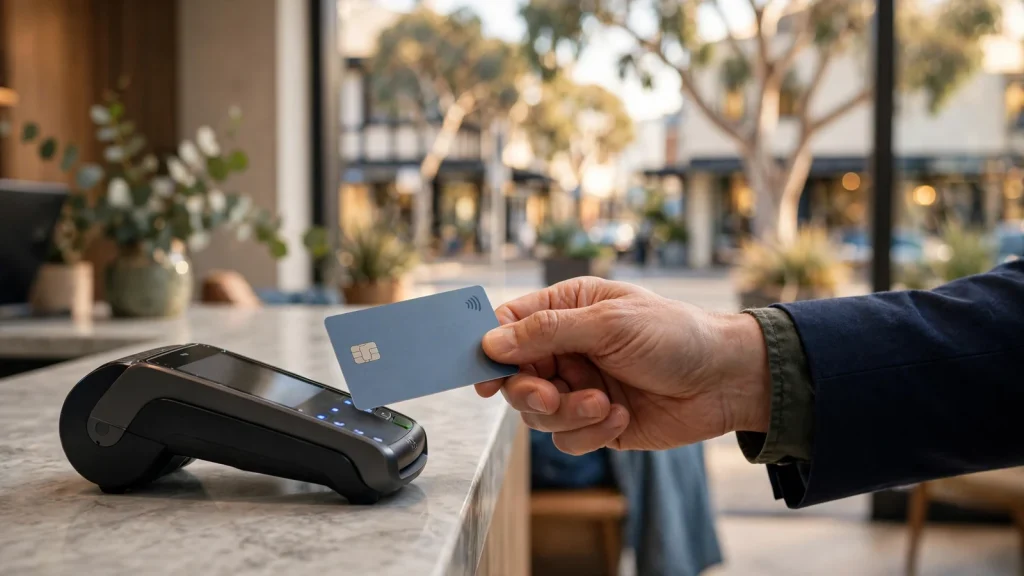
Visa’s everyday use in Australia does not establish casino acceptance, withdrawal processing, or the legality of an online gambling service.
Table of Contents
- Visa and the Everyday Australian Payments Landscape
- Visa Deposits: Acceptance Is Not a Guarantee
- Assessing Visa-Casino Claims Without a Verified Shortlist
- KYC Comes Before Casino Transactions
- The Legal Boundary Around Offshore Casino Access
- Cards, Wallets and Bank-Linked Services in Australian Payment Culture
- What “Australian Casino” Means in a Restricted Market
- Visa Withdrawals: No Verified Processing Promise
- Paying by Visa in a World of Switching Methods
- Visa Payments Do Not Verify a Casino Bonus
- Payments
Visa and the Everyday Australian Payments Landscape
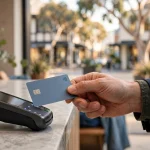
In Australia, a card can feel less like a deliberate choice than part of the furniture. Contactless credit and debit payments are accepted almost everywhere. The small gesture of bringing a card close to a terminal has become ordinary enough to disappear from attention: payment happens, and the day carries on.
Visa belongs to that familiar landscape. Its name can suggest a simple proposition: if a card works for everyday purchases, perhaps it will work wherever a payment is requested. But familiarity is not a universal passport. A payment method’s presence in ordinary commerce says something about the habits built around cards; it does not, by itself, establish where else that method is accepted.
That distinction matters when people look for an Australian online casino that accepts Visa. The words join two different settings. One is the everyday world of contactless card payments, where acceptance is widespread. The other concerns online gambling services, which are subject to a separate legal boundary in Australia. The ordinary ease of using a card cannot erase that boundary or turn a search phrase into evidence that a particular service is available.
Visa availability and payment terms can vary, so check the current cashier and conditions before depositing. This list provides a concise reference to the details available for each operator.
1. Rollero Casino
License: Curacao Gaming Control Board OGL/2023/176/0095 (Hollycorn N.V.)
Rollero Casino is listed with a Curaçao Gaming Control Board licence, OGL/2023/176/0095, held by Hollycorn N.V.
2. WinSpirit Casino
License: Curacao eGaming OGL/2024/923/0383 (Antillephone N.V.) · Min. deposit: A$30
WinSpirit Casino has a Curaçao eGaming licence, OGL/2024/923/0383, held by Antillephone N.V. Its minimum deposit is A$30.
3. Playfina Casino
License: Curacao eGaming (Hollycorn N.V., since 2017) · Min. deposit: A$20-30 (depends on the offer)
Playfina Casino is operated by Hollycorn N.V. and has been licensed in Curaçao since 2017. Its minimum deposit is A$20–30, depending on the offer.
4. Thor Casino
License: Curacao – Antillephone N.V. (Versus Odds B.V.) · Min. deposit: EUR 20
Thor Casino is associated with Antillephone N.V. in Curaçao, with Versus Odds B.V. named as the operator. Its minimum deposit is EUR 20.
5. LevelUp Casino
License: Curacao eGaming OGL/2023/174/0082 (Dama N.V.) · Min. deposit: A$15
LevelUp Casino has a Curaçao eGaming licence, OGL/2023/174/0082, held by Dama N.V. Its minimum deposit is A$15.
6. Bizzo Casino
License: Curacao Gaming Control Board (TechSolutions Group N.V.)
Bizzo Casino is associated with a Curaçao Gaming Control Board licence and TechSolutions Group N.V.
7. Lucky Dreams
License: Curacao · Min. deposit: A$20 (POLi)
Lucky Dreams is listed with a Curaçao licence. Its minimum deposit is A$20 via POLi.
8. SpinsUp
License: Curacao Gaming Control Board OGL/2023/174/0082 (Dama N.V.)
SpinsUp is listed with a Curaçao Gaming Control Board licence, OGL/2023/174/0082, held by Dama N.V.
9. Ricky Casino
Payout speed: crypto under 1 hour, PayID 1-3 business days · Min. deposit: A$20 (A$30 to qualify for the bonus)
Ricky Casino lists crypto payouts in under 1 hour and PayID payouts in 1–3 business days. The minimum deposit is A$20, or A$30 to qualify for the bonus.
10. House of Pokies
License: international iGaming licence – jurisdiction not named in the source · Payout speed: PayID 1-24 hours · Min. deposit: A$30 (PayID from A$10)
House of Pokies has an international iGaming licence, though the jurisdiction is not named in the available information. PayID payouts are listed at 1–24 hours; the minimum deposit is A$30, with PayID deposits from A$10.
There is a small social history in the convenience of tapping. A payment system works best when it asks for little attention: the card is recognised, the exchange is completed, and neither party needs to make a ceremony of it. That ease can make acceptance seem like a property of the card itself, as though Visa carries a general permission to pay. In practice, acceptance belongs to the setting as much as to the card. The same familiar symbol may have a place in one transaction and no place in another.
This is why everyday experience can mislead without being false. A person may see contactless Visa accepted across ordinary Australian shops and services, then assume that the same reach extends to every online context. The first observation is sound; the extension is not. A widespread payment habit is not a statement about the legal status of the activity being paid for, nor a guarantee about an individual merchant’s arrangements.
The phrase “Visa mobile casino” also folds together ideas that sit apart. A mobile device can make a service appear close at hand, while Visa evokes a recognised way to pay. Neither fact settles whether the underlying service may lawfully be offered to people in Australia. The screen is only a screen. Convenience has a way of making the conditions around a transaction look smaller than they are.
Dragon Link Online Pokies in Australia: Bitcoin Context
There is no contradiction in saying that contactless cards are accepted almost everywhere in Australia and that this should not be read as a blanket claim about online casinos. One statement concerns the breadth of an everyday payment custom. The other would concern a particular activity, provider and legal setting. Treating them as interchangeable would ask a general habit to answer a question it was never designed to answer.
That caution is not a technicality. Payment systems are often encountered as neutral tools, but their use takes place inside institutions and rules. A card can make an ordinary purchase feel frictionless; it cannot make every proposed transaction ordinary. In Australia, real-money online casino services sit within a restricted market, not within the broad everyday world suggested by a contactless tap. The difference deserves to remain visible.
Visa’s everyday presence therefore explains why the method comes to mind. It does not settle whether an online gambling service is available, lawful to offer, or able to accept a card. Those are distinct questions, and the answer to one cannot be borrowed from the ease of another.
A familiar card is not a universal permission slip.
Visa Deposits: Acceptance Is Not a Guarantee
Visa has a familiar place in Australian payments, but familiarity does not settle whether a particular online casino will accept a Visa deposit. A specialist review has described Visa as more broadly accepted at Australian online casinos than American Express. That is a limited comparison, not a promise that every operator takes Visa, or that a card payment will be available to every customer.
Attention: A Visa logo on a general payment page does not guarantee that deposits are enabled for your specific account or that the service is domestic.
The distinction matters because “accepted” can sound like a fixed property of the card. In practice, the cashier is where an operator presents its available payment methods, and those options may differ between services. A Visa logo on a general payment page cannot, by itself, establish that Visa deposits are enabled for a particular account. Nor does the card network’s ordinary presence in Australia turn an offshore casino into a domestic service.
There is a larger national contradiction behind this small payment question. Contactless cards are woven into ordinary Australian commerce, yet the law prohibits operators from providing real-money online casino games to people in Australia. The ease with which a card is used in daily life can make a casino payment seem like merely another checkout. It is not. The payment method does not alter the legal status of the service.
A Visa deposit therefore has several separate gates: the operator’s cashier must present the method, the transaction must be permitted by the relevant payment and banking arrangements, and the account must be able to proceed under the operator’s process. A card brand alone cannot confirm all of these. That is the quiet gap between a payment symbol and a working transaction.
Searches for a casino that accepts Visa deposits often compress these questions into one. They can suggest that acceptance is a simple yes-or-no feature, settled once and for all. But a general statement about Visa’s relative reach does not identify a specific site, establish its current cashier options or show what amount it would accept. A low figure typed into a search bar does not become a minimum deposit merely by being precise.
Casinos That Accept POLi in Australia: Legal Limits
That precision is tempting. It gives a financial decision the appearance of a known entry point. Yet no particular deposit amount follows from the comparison between Visa and American Express. Minimums and transaction conditions belong to the individual service, where they may be stated in the cashier or payment terms. Without those details, attaching a number to Visa would be invention dressed as practical advice.
The same caution applies to phrases such as “Visa supported” or “pay by card.” They can describe a broad capability while leaving out whether Visa itself is available for deposits, whether the option appears in the relevant cashier, or whether an attempted payment will pass. The first indication of the available method is not a guarantee of completion. A payment screen is not a contract with the bank.
Australian law makes the surrounding issue more consequential than a routine checkout. Under the Interactive Gambling Act 2001, operators may not offer real-money online casino games to people physically in Australia. The Australian Communications and Media Authority enforces the Act, and Australian consumer law does not protect players using offshore casinos. A payment option should not be mistaken for local approval or consumer protection.
This does not make Visa a special legal exception. It means the card question sits inside a restricted market, rather than a normal domestic retail setting. A cashier may display a method, but its appearance cannot validate the operator’s offer to Australians. A familiar logo is a poor substitute for a lawful service.
Legal Risk
Under the Interactive Gambling Act 2001, operators are prohibited from providing real-money online casino games to people in Australia.
The restrained conclusion is less satisfying than a shortlist or a neat deposit threshold: Visa may be more broadly accepted than American Express, according to a specialist review, but that comparison cannot establish acceptance at any individual casino. Nor does it settle the amount, availability or outcome of a deposit. For Visa, the cashier is the immediate point at which an operator’s stated options become visible; it is not proof that the service itself is lawful or that a transaction is assured.
A card can be familiar. The service is another matter.
Assessing Visa-Casino Claims Without a Verified Shortlist
A label such as “Visa accepted” can look decisive while answering only a narrow question: whether a payment option is said to be available. It does not, by itself, establish that the claim applies to every customer, that a transaction will be approved, or that the operator is entitled to offer online casino gambling in Australia. A payment logo is not a licence, and a polished comparison page cannot turn one into one.
The limited comparison sometimes made is that Visa may be accepted more broadly than American Express at Australian online casinos. That distinction appears in a specialist review, but it is a qualified comparison, not a dependable rule for every site. It does not identify which operators accept Visa, confirm that any particular cashier currently offers it, or establish what conditions apply. Extending it into a ranked list of the best Visa casino sites would make the claim carry more weight than it can bear.
Casinos That Accept PayID in Australia: What to Check
“Best” also conceals several different standards. One ranking might prize a broad choice of payment methods; another might emphasise the ease of using a site; a third might rely on ratings or promotional language. Without a transparent basis, a position near the top says little about whether Visa is actually available to a particular customer. The word is often doing more work than the evidence.
A more careful reading separates three questions. First, does a page claim that Visa is supported? Second, does the operator’s own information describe Visa as an available method for the relevant account and location? Third, is the underlying gambling service lawful to provide to people in Australia? Those questions are not interchangeable. A positive answer to the first does not settle the others, and payment availability does not make a prohibited service lawful.
That distinction matters because the phrase “Australian casino” can suggest a domestic, regulated business when the operator may instead be offshore. Under the Interactive Gambling Act 2001, operators are prohibited from providing real-money online casino games to people in Australia. A site’s use of Australian currency, localised wording or a Visa symbol does not alter that boundary. Nor does a payment method provide the protections of Australian consumer law: that law does not protect players using offshore casinos.
Claims about the “best Visa casino website” therefore deserve more scrutiny than a quick glance at a badge or ranking. A payment claim is not independent proof of the operator’s status, and an affiliate-style recommendation may be shaped by commercial incentives. That does not establish that every claim is false; it means the form of the claim should not be mistaken for verification. A confident headline remains a headline.
Casino Sites That Accept Amex in Australia
The same caution applies when a page promises a “Visa casino” as though the card itself defined a category of games or a quality standard. Visa is a payment network, not a measure of game fairness, operator accountability or legal standing. It cannot certify the experience around it. Even an accurate statement about payment acceptance says nothing by itself about those wider matters.
Searches for the best Visa-accepting sites often combine convenience with an implied endorsement. Those are separate ideas. A method appearing in a cashier would describe a payment route; it would not make the service suitable, lawful or protected for Australians. Ranking language can blur that line, particularly when a list presents payment compatibility as the main reason to trust an operator.
There is no responsible way to turn a broad comparison with American Express into a named Visa shortlist. The comparison may help explain why Visa is discussed more often in payment claims, but it cannot establish a verified ranking. In a market where online casino services to Australians are prohibited, the distinction is especially important: a payment claim should not be read as an invitation or assurance. A logo proves only what the logo can prove.
KYC Comes Before Casino Transactions
The phrase “instant withdrawal” makes a clean promise of sequence: request, then money. Identity checks complicate that neat little arrangement. Online casinos commonly place a Know Your Customer assessment before financial transactions, so an account’s ability to move money may depend first on the operator establishing who is using it. A payment method does not, by itself, answer that question.
Casinos That Accept Neosurf in Australia: What to Check
KYC is an institutional checkpoint, not a feature of Visa. The same distinction matters whether someone is considering a deposit or expecting a payout: a card can identify a route for payment, but it does not replace the account assessment. Searches for instant Visa withdrawals, or for new pokies accounts that accept Visa, can make the card sound like the whole process. It is only one part of it.
That difference is easy to miss because payment language tends to describe the visible action. A cashier presents methods; a card is selected; a transaction is attempted. Identity review belongs to another register, less like choosing a route and more like establishing whether an account is ready to transact at all. The two may meet at the moment money is involved, but they are not interchangeable.
The assessment is generally a condition placed before financial activity, rather than an optional extra that can be ignored because a transaction seems routine. That has consequences for expectations around speed. “Instant” describes what a search phrase hopes to find, not what an account-check process guarantees. Where identity review stands between an account and a transaction, the payment label cannot settle the timing or outcome.
This is relevant to deposits as well as payouts. It is tempting to think of verification as a final hurdle, appearing only when winnings are requested. The broader point is that the check may be required before financial transactions in either direction. A deposit is not necessarily a way around the account assessment; nor does having used a particular card mean the account has completed it.
KYC Requirements
Know Your Customer (KYC) assessments are institutional checkpoints that may be required before financial transactions can proceed, regardless of the payment method used.
The phrase Know Your Customer also carries a wider institutional history. Financial services have long had to distinguish the person making a transaction from the account through which it passes. Online platforms inherit that concern, then place it inside a screen that otherwise makes the movement of money look almost frictionless. The interface can be immediate; the institution behind it still asks who is there. A tidy contradiction.
There is little romance in this kind of procedure. It turns an apparently simple exchange into a relationship between an account holder and an organisation that wants identity established before financial activity. That relationship is not made simpler by calling a payment “instant”, or by attaching Visa to the description. Those words name a hoped-for route and speed; they do not remove the assessment.
For anyone weighing claims about fast Visa transactions, KYC is therefore a separate question from whether a card is listed as a payment option. It concerns the account’s readiness to transact, not the card’s general place in Australian payments. A promise about a method cannot stand in for an identity check. The order matters.
The Legal Boundary Around Offshore Casino Access
Visa is a familiar part of ordinary Australian payments, but a familiar card does not change the legal status of the service being paid for. Searches for casinos that accept Visa in Australia can make the question sound like a matter of cashier settings. The more consequential boundary is set by the Interactive Gambling Act 2001.
The Act prohibits operators from offering online casino games to people in Australia. That category includes familiar formats such as poker and table games, not merely a particular kind of website or payment arrangement. A site’s foreign location, branding or choice of card processor does not turn an offer to Australian residents into a locally permitted service. Payment access and legal permission are separate matters.
Casinos That Accept Litecoin in Australia: Legal Limits
The distinction falls chiefly on the operator. The Act does not explicitly make it a criminal offence for an individual to use an offshore casino. That is not the same as approval, protection or a promise that a service will remain accessible. It means the statute’s prohibition is directed at the provision of the service, rather than expressly criminalising the player for using it. A narrow distinction, but an important one.
Enforcement belongs to the Australian Communications and Media Authority, commonly known as ACMA. Its role is to administer and enforce the Act. The regulator’s presence is not a local licence for offshore operators, nor evidence that a casino accepting Visa has been assessed as lawful for Australians. A payment logo answers a technical question about a card network; it says nothing about the legal standing of the gambling service.
There is another boundary, less visible at the point of payment. Australian consumer law does not protect people who use offshore casinos. If a dispute arises, the consumer protections available for domestic transactions cannot simply be assumed to follow the player across the border. The difference between a card being accepted and a customer having meaningful recourse is not a minor footnote. It is the part that tends to appear after something has gone wrong.
This makes phrases such as “Australian casino” especially slippery. They may describe an audience a site hopes to reach, a currency it displays, or a payment method it supports; none establishes that the operator may legally offer online casino games in Australia. Visa acceptance is not a substitute for that legal distinction.
So the practical meaning of “casino with Visa” is narrower than it sounds. It describes a possible payment route, not a judgement about the operator or a shield for the customer. The law draws the line before the cashier does. Pretty logos do not move it.
Cards, Wallets and Bank-Linked Services in Australian Payment Culture
Australian payment habits are less a march from one method to another than a practice of keeping several routes in reach. A card may handle one purchase, a phone another, while a bank-linked service such as PayPal sits between the account and the merchant. Switching among them is ordinary rather than a sign of special technical enthusiasm.
Casinos That Accept Mastercard in Australia
Mobile wallets have become part of that everyday pattern. Google Pay and Apple Pay are accepted in nearly every corner of Australian commerce, making a phone a familiar stand-in for a physical card. The distinction between the two can feel small at the counter; the larger change is that payment has become portable across devices and settings. A wallet is not a new bank so much as a new way to present an existing payment relationship.
Cards still matter, though they no longer have to carry every transaction alone. Visa belongs to this familiar card landscape, but a national habit of using cards does not mean that every merchant, service or transaction treats them alike. Nor does the popularity of a payment method establish that it is available for every purpose. Payment culture describes what people are accustomed to doing; it cannot by itself settle what a particular provider permits.
That distinction matters especially around online casino services. Australia’s Interactive Gambling Act 2001 prohibits operators from providing real-money online casino games to people in the country. A familiar card, mobile wallet or bank-linked service does not alter that boundary, and this discussion is not an invitation to use any such service for casino play. Australian consumer law does not protect people who use offshore casinos.
The varied payment landscape says something about trust as well as convenience. Cards connect a purchase to a familiar issuer; mobile wallets package that connection for a phone; bank-linked services place another intermediary in the chain. People move between these forms without treating every choice as a declaration of loyalty. The practical culture is one of adaptation, with the method changing according to the setting.
That flexibility can make payment brands seem more universal than they are. A name recognised at shops and online merchants may still have different status elsewhere, because acceptance depends on the service and the rules around it. Broad familiarity is not a blank cheque. No mystery there.
What “Australian Casino” Means in a Restricted Market
“An Australian casino” can mean a venue in Australia, a site aimed at Australians, or simply an offshore service that accepts Australian customers. Those descriptions are not interchangeable. The first suggests a local establishment; the others can make a foreign operator sound like part of a domestic market that the law does not permit for online casino games.
Casinos That Accept MiFinity in Australia: What to Know
Under the Interactive Gambling Act 2001, operators are prohibited from providing online casino games to people in Australia. The restriction covers the service being offered, not merely the operator’s address or the currency displayed on a page. A site presenting itself as Australian, listing Australian dollars or showing a Visa symbol does not thereby become a locally authorised online casino.
That distinction matters to searches for a casino in Australia that accepts Visa. The payment label answers, at most, a question about a payment method. It does not settle whether an operator may provide casino games to people in the country. Nor does a familiar brand or Australian-facing language alter the statutory boundary. A national market is not created by a flag in a footer.
The law’s focus is the operator. It does not explicitly make an individual player’s use of an offshore site a criminal offence. That narrower point should not be mistaken for approval, legal protection or a guarantee that a service will remain accessible. Australian consumer law does not protect people using offshore casinos, leaving them without the ordinary domestic safeguards they might associate with a local business.
The phrase “Australian casino” therefore carries a tension. In everyday commercial language it can describe a site courting Australians; in the legal setting, that same description cannot establish that online casino games are lawfully supplied to people here. Visa acceptance, where claimed, does not resolve the tension. A payment method is not a licence, and a local-sounding label is not a legal status.
The boundary is plain; the terminology is not.
Visa Withdrawals: No Verified Processing Promise
A Visa deposit and a Visa payout are separate parts of a transaction. Seeing Visa listed as a way to pay does not, by itself, show that winnings can be sent back to the same card. Nor does it establish how long a withdrawal would take. There is no sound basis for treating “Visa accepted” as a promise about the route or timing of a casino withdrawal.
Payments & Withdrawals at Australian Casinos
Before any financial transaction, an online casino may require identity checks under its Know Your Customer procedures. That assessment can stand between an account holder and a transaction, whether money is moving in or out. A card logo cannot settle that question; it concerns account verification, not the availability of a particular payout method.
The distinction matters because payment language often compresses several different things into one neat symbol. A cashier may show a way to fund an account without explaining whether that method can receive a payout. A withdrawal request may also be subject to checks before it is processed. These are separate conditions, not details that can be inferred from the presence of Visa at the deposit stage.
A specific claim would need to be supported by current, applicable terms; otherwise it remains a claim, not a dependable expectation. No timetable should be built around it.
There is also a larger boundary around offshore casino transactions in Australia. The Interactive Gambling Act 2001 prohibits operators from providing real-money online casino games to people in Australia, and the Australian Communications and Media Authority enforces the law. Players are not explicitly criminalised for using offshore sites, but Australian consumer law does not protect people who use them. That leaves little comfort in a payment logo.
Key Conclusions
- Visa’s presence in Australian commerce does not guarantee its acceptance at any specific online casino.
- A payment method does not alter the legal status of a prohibited gambling service.
- Identity verification (KYC) is a separate requirement from payment method availability.
- Australian consumer law does not protect players using offshore casinos.
Paying by Visa in a World of Switching Methods
A Visa card sits within a broader Australian habit: payment methods are chosen and changed according to circumstance, rather than treated as permanent loyalties. Consumers are comfortable moving between cards, mobile wallets and bank-linked services such as PayPal. The wallet, in this sense, is less a single object than a small repertoire.
That habit shapes how people think about paying online, including when they look into a casino payment method. A familiar card may seem like the natural starting point; a wallet or bank-linked service may be more familiar in another setting. But a preference is not proof of availability. A search for a casino that accepts Visa cannot, by itself, establish that any particular service takes the card or that a transaction would be permitted.
The distinction matters because everyday payment culture can make online services seem more uniform than they are. Contactless cards and mobile wallets have become ordinary parts of Australian commerce, while the act of switching between methods is itself unremarkable. None of that settles what a particular online service supports. Convenience in a shop does not travel intact into every digital setting.
There is also a quieter social history in this ease of switching. Payment systems compete to become familiar, and familiarity lowers the effort involved in moving from one setting to another. Yet the consumer’s sense of continuity can conceal differences between the institutions and rules behind each transaction. A card, a mobile wallet and a bank-linked service may all appear as buttons on a screen; they are not thereby interchangeable in policy or reach.
For that reason, talk of paying by Visa at a casino should be kept separate from the broader fact that Australians move readily among payment methods. The latter describes a habit. It does not identify an operator, verify its services or make an otherwise restricted activity lawful. A payment choice is only a choice within the boundaries that apply to the service itself.
Casino sites that accept BPAY in Australia: what’s known
The method may feel familiar. That is not the same as permission, access or acceptance.
Visa Payments Do Not Verify a Casino Bonus
A Visa symbol and a bonus banner belong to different parts of a transaction. The card mark indicates a payment brand; it does not establish that an incentive exists, that a particular payment qualifies for one, or that any advertised condition has been met. Treating the two as a package turns a familiar logo into a promise it cannot make.
That distinction matters because promotional language can make a payment method look like a route to extra value. A phrase such as “Visa bonus” may suggest a special reward attached to the card, but the wording alone proves nothing about eligibility or terms. A cashier can describe payment choices; it cannot settle what a separate promotion means.
In Australia, the larger context is not neutral. The Interactive Gambling Act 2001 prohibits operators from providing real-money online casino games to people in Australia. The Australian Communications and Media Authority enforces the Act, and Australian consumer law does not protect people who use offshore casinos. A payment logo does not alter that position.
The temptation to read certainty into a small badge is understandable: payment systems are designed to make transactions feel routine. Promotions borrow that familiarity, placing a recognisable card mark beside language about rewards. But routine appearance is not legal reassurance, and a card brand does not validate an operator’s claims.
A bonus is not a payment feature. It is a separate claim, with its own meaning and consequences; Visa neither confirms nor guarantees it. In a market where online casino services are prohibited, promotional wording should not be mistaken for an assurance of protection. Short version: the logo settles very little.
Why does my Amex deposit get declined at some casinos but not others?
Amex may block payments to a particular website, and Australian banks may also block gambling-related Amex transactions. Some casinos accept Amex deposits while others do not.
Can you use an American Express gift card at an online casino?
Yes, an Amex gift card can be used to deposit at a casino that accepts American Express, but it can’t be used for withdrawals.
Does American Express work for online casinos?
Yes, some Australian online casinos accept Amex deposits, but acceptance isn’t universal. Check the casino’s cashier for its available payment methods.
What are the fees involved with American Express payments?
Amex deposits typically have no fee, but a casino may charge a 1.5% surcharge, and currency conversion can incur a 3% fee. Withdrawal fees may also apply.
Are there fees for using Amex at online casinos?
Deposits are typically free, but a casino may add a 1.5% surcharge or withdrawal fee; currency conversion can incur a 3% fee.
Payments

Anonymous Crypto Casinos in Australia: Fees and Access
Bitcoin and other crypto options bring payment, privacy and access trade-offs for Australian casino users....

Aristocrat Online Pokies in Australia: What’s Verifiable
Brand names and casino listings alone do not establish a game's origin, online availability, or...

Aussie Crypto Casinos: Payments, Risks and Rules
A practical look at payment choices, operator boundaries, promotional terms and the limits of claims...

New Australian Online Pokies: Legal and Payment Checks
A practical look at legal limits, verification, bonus conditions and payment issues surrounding offshore real-money...

Online Casino Payment Methods for Australian Players
Payment options differ in how deposits are accepted, withdrawals are handled and funds move between...

Online pokies in Australia: what “best-paying” means
A practical guide to interpreting payout claims, distinguishing free play from real-money play, and understanding...

Bitcoin Pokies in Australia: Payments and Risks
Bitcoin is a payment method, not a feature that defines a game's software or outcome;...

Casino Sites That Accept Amex in Australia
Amex availability can depend on the casino, payment provider, card issuer and transaction, while withdrawals...

Casino sites that accept BPAY in Australia: what’s known
Australian payment language does not establish that a casino is locally authorised or that BPAY...

Australian casino sites that accept credit cards
Card acceptance can enable a deposit, but it does not establish that an offshore casino...

Casino Sites That Accept EcoPayz in Australia: Key Checks
EcoPayz availability, cashier terms and withdrawal timing do not establish that an offshore casino may...

Casino Sites That Accept Osko in Australia: Evidence
The article distinguishes Australian casino terminology from payment evidence, including why a search phrase alone...
Paysafecard at Australian casino sites: what is verified
Mentions of Australian pokies, local payment preferences and cashier options do not by themselves establish...

Skrill for Australian Casino Sites: What Can Be Verified
Skrill acceptance is specific to an operator and transaction, while Australian rules place responsibility for...

Trustly casino sites in Australia: checking claims
Everyday payment habits and a Trustly label do not, on their own, confirm that a...

Under-an-hour casino withdrawals in Australia
PayID can move a released payment promptly, but the casino’s review and decision to release...

No-Verification Casino Withdrawals in Australia
Registration claims do not settle cashout rules: identity checks, payment processing and bonus conditions can...

Casinos That Accept Apple Pay in Australia
Australian contactless habits do not establish which online casinos accept Apple Pay or what their...

Casinos That Accept Bitcoin in Australia: Rules & Risks
Bitcoin can change how deposits and withdrawals work, but it does not make an offshore...

Casinos accepting Bitcoin Cash in Australia: a guide
BCH is a payment method, not a legal exemption; offshore access, game availability and withdrawal...

CashtoCode Casinos in Australia: What Can Be Verified
The Interactive Gambling Act 2001 bars operators from offering online casino games to people in...

Casinos That Accept Ethereum in Australia: What’s Verifiable
Ethereum may offer fast, low-fee transfers in general, but that does not confirm availability or...
Casinos That Accept Google Pay in Australia
Familiarity with mobile wallets does not prove an online casino accepts Google Pay or supports...

Casinos That Accept Litecoin in Australia: Legal Limits
The law, payment claims and account checks are considered separately, since accepting Litecoin does not...

Casinos That Accept Mastercard in Australia
Everyday card use in Australia does not establish which online casinos accept Mastercard or whether...

Casinos That Accept MiFinity in Australia: What to Know
Payment acceptance cannot establish whether an offshore casino may legally offer real-money games to people...

Casinos That Accept Neosurf in Australia: What to Check
A search result or casino label alone cannot establish Neosurf availability, permitted use, or withdrawal...

Casinos That Accept Neteller in Australia: What to Know
A careful look at how Neteller, pokies, Australian audiences, deposits, withdrawals and bonus claims are...

Casinos That Accept PayID in Australia: What to Check
The article examines the limits of evidence on PayID acceptance, deposits and withdrawals at casino...

Casinos That Accept PayPal in Australia: What to Know
PayPal availability, withdrawal options and a site's legal status are separate questions when assessing Australian-facing...

Casinos That Accept POLi in Australia: Legal Limits
Payment-menu claims do not establish legality, and the available evidence does not confirm whether casinos...

Casinos That Accept Tether USDT in Australia
The article distinguishes general crypto-payment claims from what is known about Tether, casino terms and...

Dragon Link Online Pokies in Australia: Bitcoin Context
A pokie describes a digital slot game, while Bitcoin describes a payment method; the name...

Easy Withdrawal Casinos in Australia: How Payouts Work
Withdrawal speed depends on operator approval as well as the payment method, and Australian law...

Fast Withdrawal Casinos in Australia: Payment Routes
Withdrawal timing depends on casino processing as well as the payment network, while limits, fees...

Instant Bank Transfer Casinos in Australia
Bank transfer options can differ in how they fund an account, handle withdrawals and fit...

Real-Money PayID Withdrawals in Australia: How Fast?
PayID can move bank-to-bank payments in real time, but the operator must release a withdrawal...

Instant PayID Withdrawals in Australia: How They Work
PayID can move released funds in real time, but casino reviews, first withdrawals and wagering...

PayID Pokies in Australia: Payments and Legal Context
The guide distinguishes payment mechanics from legality and explains deposits, withdrawals, limits and bonus conditions...

No-KYC Casinos in Australia: Checks and Payouts
The label may describe signup, but it does not rule out identity checks when a...

Online Pokies Instant Withdrawals in Australia
A withdrawal depends on operator checks and release as well as the speed of the...

Online Pokies PayID in Australia: How Payments Work
PayID is an identifier used through the New Payments Platform, but acceptance alone does not...

Pay by Phone Casinos in Australia: PayID Explained
The guide distinguishes carrier-billed charges from bank payments and explains why payment approval, bonuses and...

Quick Casino Withdrawals in Australia: How They Work
Payment speed depends on the transfer method, casino terms, identity checks and whether a deposit...

Real Cash Online Pokies in Australia: Bitcoin Play
Bitcoin changes how deposits are made, but game credits, bonus terms and offshore protections determine...

Safe Online Pokies in Australia: What Safety Means
The guide separates account and payment safeguards from legal status, and explains Bitcoin transfers, offshore...

Same-Day Casino Payouts in Australia: The Process
A withdrawal moves through operator checks and payment rails, so “same day” may describe release...

Solana Casino Comparison for Australia
Follow the exchange-to-wallet path and assess legal uncertainty, bonus terms, token exposure and withdrawal conditions....