Trustly casino sites in Australia: checking claims
 Available in AU

Everyday payment habits and a Trustly label do not, on their own, confirm that a casino supports deposits or withdrawals.
Table of Contents
- Trustly and the Australian Casino-Payment Landscape
- What a Trustly Deposit Claim Can—and Cannot—Establish
- Withdrawal Speed Is Not Verified by the Payment Label
- Reading “Accepts Trustly” Claims in 2026
- Why a “Best Trustly Casino” Ranking Cannot Be Substantiated
- Casino Games and Payment Methods Are Separate Questions
- The Australian Legal Context for Offshore Casino Searches
- Trustly Withdrawal Searches and the Missing Evidence
- Paying with Trustly: Australian Habits, Not Proof of Acceptance
- Online Slots and Trustly: Two Unverified Claims
- Payments
Trustly and the Australian Casino-Payment Landscape
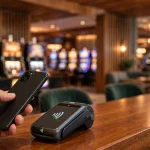
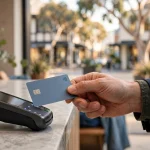
Australian payment habits are shaped by a quiet kind of ubiquity. Contactless credit and debit cards are accepted almost everywhere, as are mobile wallets such as Google Pay and Apple Pay. Paying by tapping a card or phone has become ordinary enough to disappear into the background: the transaction is noticed less than the small pause at a counter when a terminal is unavailable.
That familiarity matters when payment methods appear in connection with online gambling. A name beside a cashier option can look like a simple extension of daily banking, but the surrounding habits do not establish which methods a particular service supports. Australians may move readily among cards, phone wallets and services linked to bank accounts, including PayPal. That is a picture of consumer comfort, not a catalogue of casino payment routes.
Trustly belongs in a different kind of conversation from a card or a phone wallet. Its name may appear in searches about Australian casinos and pokies, sometimes alongside requests for mobile access or a list of supposedly suitable sites. Yet a familiar pattern of electronic payments cannot settle whether a particular operator offers Trustly, how it would appear in that operator’s cashier, or whether the option would be available to an Australian customer. Familiarity with bank-linked services is not transferable evidence.
The distinction is easy to miss because payment interfaces flatten unlike things into neat rows. A card, a wallet and a bank-linked service can all be presented as buttons, as if they were merely different skins over the same process. In daily life, the differences may feel small: a phone opens a wallet, a card is tapped, an account-linked service connects a payment to a bank. At a gambling cashier, however, the operator’s own arrangements determine what is offered. A general national habit cannot fill in those details.
This is why the phrase “Australian casino payments” can be misleading. It sounds like a single, settled menu, when the known picture is broader and more ordinary: cards and mobile wallets are widely accepted across Australia, and people are comfortable changing between these and bank-linked services. The phrase describes the surrounding payment culture. It does not certify that online gambling services reproduce that culture, or that every payment method familiar in shops and apps is available in a casino cashier.
Skrill for Australian Casino Sites: What Can Be Verified
There is also a difference between recognising a payment brand and knowing what its presence means. A name may be mentioned in a page title, a comparison, or a customer’s account of a transaction. Those appearances do not carry equal weight. A current cashier option would be a concrete operator-level detail; a general mention is only a mention. Without that distinction, a search for Australian Trustly casinos can turn into a chain of assumptions: bank-linked payments are familiar, Trustly sounds bank-linked, therefore a casino must accept it. The conclusion does not follow.
The country’s everyday payment landscape offers context, not confirmation. Australians are accustomed to choosing between a plastic card, a mobile wallet and a service connected with a bank. That ease of switching may help explain why a range of payment names feels plausible in online settings. It says something about consumers’ expectations and the increasingly unremarkable role of digital payments. It says nothing by itself about a named method’s availability at a particular cashier.
Nor does a mobile-friendly setting change the evidential question. A payment option displayed on a phone would still need to be an option actually provided by the relevant service; the device does not make a method available. “Mobile casino” and “Trustly” can sit together in a phrase without describing a verified payment arrangement. Search language compresses several separate ideas—location, games, device and payment—into a few words. The cashier keeps them separate.
There is a social history in this compression. When electronic payments become familiar, people reasonably expect them to travel with them from one setting to another. The interface encourages that expectation: one more logo, one more tap, one less visible boundary between a bank and a service. But convenience is not a universal passport. Payment choices remain specific to the merchant and the transaction, however familiar the technology may seem.
So the Australian landscape can be described without turning it into a claim about Trustly acceptance. Contactless cards and mobile wallets are widely used; people are comfortable moving among cards, wallets and bank-linked services such as PayPal. Those habits make digital payment options unsurprising. They do not establish that Trustly is offered by any Australian casino, nor do they identify a particular cashier as supporting it. A familiar habit is not a payment receipt.
Casino sites that accept BPAY in Australia: what’s known
What a Trustly Deposit Claim Can—and Cannot—Establish
A statement that a casino accepts Trustly for deposits is narrower than it may sound. At most, if accurate and current, it says that Trustly is offered as a way to move funds into an account under particular conditions. It does not establish that every customer can use it, that every account currency is supported, or that the route is available to people in Australia. Those details belong to the operator’s actual cashier and terms, not to the reassuring breadth of a label.
A deposit method is not a general property of a brand. Payment options can depend on the customer’s location, account status and the options displayed at the point of payment. A page describing a casino’s methods in broad terms may therefore tell less than it appears to: “bank payment” is not necessarily Trustly, and the presence of one bank-linked service does not establish the presence of another. Similar names and similar functions are not interchangeable evidence.
Casinos That Accept Ethereum in Australia: What’s Verifiable
This distinction matters because the deposit itself is a sequence, not a slogan. A method has to be presented in the cashier, selected for the relevant account, and accepted when the transaction is submitted. A claim detached from those steps could describe a past arrangement, a service offered elsewhere, or an option that does not apply to an Australian user. Without confirmation tied to the actual service and location, “casino deposit via Trustly” remains a description of what someone hopes to find, not proof of a working route.
The amount attached to a deposit claim needs equal care. A figure such as ten dollars may be part of a page title, an advertisement, or a search for a low entry point; it does not prove that Trustly is available, or that a casino would accept that amount through it. A minimum can vary by method or account, and the relevant terms would have to state it. No amount should be inferred from the mere pairing of a payment name and a deposit figure. A number in a headline is not a cashier setting.
“Best” introduces another leap. A casino could not be judged as the best place for Trustly deposits merely because a page says the method is accepted. A meaningful comparison would require confirmed access for Australian users and consistent details about the conditions attached to the route. Without those, the adjective does more work than the evidence. It turns an uncertain payment claim into a recommendation.
Do
- Check the actual cashier for available options
- Review current operator terms and conditions
- Verify location-specific availability
Don’t
- Rely on general payment labels as proof
- Assume a deposit method allows withdrawals
- Infer minimums from headline figures
There is also a difference between general payment information and confirmation at the moment a payment is made. A broad list may describe methods associated with a service, but a customer-facing cashier is where the available options for that account are presented. Even then, the appearance of a payment button would establish only that the option is displayed; it would not, by itself, settle every condition attached to using it. Terms and any relevant restrictions still matter.
That is the boundary of a deposit claim: it can identify a possible method, but only specific, current information can show whether it applies to a particular place and account. It cannot establish a minimum, a successful transaction, or access in Australia by implication alone. A casino’s general payment menu and a verified Trustly deposit route are different things. The distinction is prosaic. It is also the whole point.
In Australia, the legal setting makes payment claims particularly poor substitutes for broader legitimacy. The Interactive Gambling Act 2001 prohibits operators from offering real-money online casino games to people in the country. Australian consumer law does not protect players who use offshore casinos. A payment method, even if accurately described, changes neither point. It is a mechanism, not a permission slip.
The language of deposits often compresses several separate propositions into a single phrase: that an operator exists, that it offers a particular payment service, that the service is available to an Australian account, and that a specified amount can be sent through it. Each proposition needs its own support. Without it, a neat label remains neat—and incomplete.
Withdrawal Speed Is Not Verified by the Payment Label
A payment method shown beside a casino’s deposit options does not, by itself, explain how winnings can be paid out. Depositing and withdrawing are separate transactions, with separate conditions. A Trustly label associated with putting money into an account cannot establish that Trustly is also available for withdrawals, or say how long a withdrawal would take.
Casino Sites That Accept Osko in Australia: Evidence
That distinction matters because “instant withdrawal” compresses several different events into one attractive phrase. A request may be submitted, reviewed, approved and then processed through a payment channel. The word “instant” does not say which of those steps it describes. Nor does it identify when the money would be usable in a bank account. Without clear, operator-specific terms, the label is a claim without a useful measure.
The search for an instant Trustly withdrawal at an Australian casino therefore contains two separate propositions: that Trustly can be used to receive winnings, and that the payout arrives immediately. Neither follows from a deposit option. A cashier’s payment menu is not a complete account of its withdrawal rules.
There is a further distinction between a real-money balance and money that can actually leave an account. Casino terms may make financial transactions conditional on identity checks; online casinos typically require a Know Your Customer assessment before financial transactions. That process belongs to the operator’s handling of an account, not to the payment method’s name. A payment label cannot tell whether a withdrawal request is ready for processing or what checks apply.
Speed also depends on what a claim means by “withdrawal.” It might refer to the operator approving a request, rather than the funds reaching the recipient. Those are not interchangeable milestones. A fast internal decision would not prove that a transfer had cleared, just as a familiar bank-linked service would not, on its own, prove that an operator supports it for payouts.
This is why searches for instant Trustly pokies or real-money casino withdrawals should be read cautiously. The wording expresses a desired combination of payment route, game category and speed; it does not certify that the combination exists. Adding “no deposit” or “bonus” changes the promotional promise being sought, not the evidence needed to establish a working withdrawal route. A bonus condition would require its own terms, and no speed can be inferred from the presence of a promotion.
A careful account of any payout claim would need to distinguish the method accepted for deposits from methods available for withdrawals, and operator approval from receipt of funds. It would also need to set out the relevant conditions in terms that can be checked. Without those distinctions, “instant Trustly withdrawal” leaves the important part unstated: instant at which point?
Casino Sites That Accept Amex in Australia
The word earns its keep only when the event it measures is clear. Otherwise it functions less as a timetable than as decoration.
For Australian readers, there is also a limit to what payment convenience can mean in this setting. The Interactive Gambling Act 2001 prohibits operators from offering real-money online casino games to people in Australia. Offshore casino use does not receive the protection of Australian consumer law. Those facts do not change according to whether a site names a bank-linked payment service, or how quickly a payout is described.
A payment method is not a guarantee of access, approval or arrival. For a withdrawal claim, the meaningful details are the actual payout route and the conditions attached to it—not the speed implied by a label.
Reading “Accepts Trustly” Claims in 2026
“Accepts Trustly” sounds like a plain description of a payment option. In practice, the phrase can cover several different situations: a service may appear in a general payment guide, be available in one country but not another, or be named by an operator without being offered to every account. The wording alone cannot establish that an Australian customer can use it at a particular casino.
That distinction matters because payment labels are often treated as if they were permanent features. They are not. A cashier can change; a provider can be added or removed; access can depend on location or account status. A name on a page is therefore not the same thing as a working route shown at the point where a payment would be made.
The absence of a named operator is less satisfying than a neat list. It is also more accurate.
There is a further complication in the Australian setting. The Interactive Gambling Act 2001 prohibits operators from providing real-money online casino games to people in Australia. ACMA is responsible for enforcing that law. A payment method’s appearance on an offshore site does not alter the legal position of the service being offered, nor does it make that service locally authorised. Australian consumer law does not protect people who use offshore casinos.
Legal Risks
The Interactive Gambling Act 2001 prohibits operators from offering real-money online casino games to people in Australia, and consumer law does not protect players using offshore casinos.
This is not a technical footnote. Payment branding can lend an air of ordinary commerce to a service that sits outside the domestic protections consumers may expect. A familiar financial name may make a page feel settled and dependable; it does not tell whether the operator can lawfully provide casino games in Australia, whether the payment route is currently available, or what recourse exists if a transaction goes wrong. Familiarity is not a safeguard.
The phrase “casino that takes Trustly” also compresses separate questions into one. Is the operator accessible from Australia? Is it offering the payment option to Australian accounts? Does the option appear in the cashier at the time of use? Does the operator’s description match the service actually presented? Each question requires its own evidence. A broad statement of acceptance cannot answer all of them.
Nor does the presence of Trustly in a casino-related discussion show that the service has been integrated into a specific casino’s payment flow. References can be copied, carried forward after arrangements change, or detached from the country for which they were written. A claim can remain online long after the practical conditions behind it have shifted. Digital certainty has a long shelf life; accuracy, less so.
That restraint is not a judgement about the quality of any operator. For Australian residents, it also keeps the payment question separate from the legal status of online casino services. Those are related matters, not interchangeable ones.
A clear label is not proof.
Why a “Best Trustly Casino” Ranking Cannot Be Substantiated
Use this list as a starting point when researching casino sites for the Australian market and the Trustly payment option. Check each site’s current cashier and terms to confirm whether Trustly is available to you.
1. Rollero Casino
License: Curacao Gaming Control Board OGL/2023/176/0095 (Hollycorn N.V.)
Rollero Casino is listed with a Curacao Gaming Control Board licence, OGL/2023/176/0095, held by Hollycorn N.V.
2. WinSpirit Casino
License: Curacao eGaming OGL/2024/923/0383 (Antillephone N.V.) · Min. deposit: A$30
WinSpirit Casino is listed with a Curacao eGaming licence, OGL/2024/923/0383, held by Antillephone N.V. Its minimum deposit is A$30.
3. Playfina Casino
License: Curacao eGaming (Hollycorn N.V., since 2017) · Min. deposit: A$20-30 (depends on the offer)
Playfina Casino is associated with Hollycorn N.V. and has been licensed in Curacao since 2017. Its minimum deposit is A$20–30, depending on the offer.
4. Thor Casino
License: Curacao – Antillephone N.V. (Versus Odds B.V.) · Min. deposit: EUR 20
Thor Casino is listed with a Curacao licence from Antillephone N.V., with Versus Odds B.V. named. Its minimum deposit is EUR 20.
5. LevelUp Casino
License: Curacao eGaming OGL/2023/174/0082 (Dama N.V.) · Min. deposit: A$15
LevelUp Casino is listed with a Curacao eGaming licence, OGL/2023/174/0082, held by Dama N.V. Its minimum deposit is A$15.
6. Bizzo Casino
License: Curacao Gaming Control Board (TechSolutions Group N.V.)
Bizzo Casino is listed with a Curacao Gaming Control Board licence, with TechSolutions Group N.V. named.
7. Lucky Dreams
License: Curacao · Min. deposit: A$20 (POLi)
Lucky Dreams is listed as Curacao-licensed. The stated minimum deposit is A$20 via POLi.
8. SpinsUp
License: Curacao Gaming Control Board OGL/2023/174/0082 (Dama N.V.)
SpinsUp is listed with a Curacao Gaming Control Board licence, OGL/2023/174/0082, held by Dama N.V.
9. Ricky Casino
Payout speed: crypto under 1 hour, PayID 1-3 business days · Min. deposit: A$20 (A$30 to qualify for the bonus)
Ricky Casino lists crypto payouts as taking under 1 hour and PayID payouts as taking 1–3 business days. Its minimum deposit is A$20, or A$30 to qualify for the bonus.
10. House of Pokies
License: international iGaming licence – jurisdiction not named in the source · Payout speed: PayID 1-24 hours · Min. deposit: A$30 (PayID from A$10)
House of Pokies is listed with an international iGaming licence, though the jurisdiction is not named. PayID payouts are stated as 1–24 hours; the minimum deposit is A$30, with PayID deposits from A$10.
A ranking turns a collection of claims into an apparent order of merit. The label “best” suggests that the sites have been checked against shared criteria: whether Trustly works for deposits, what else the operator offers, and how its terms compare with those of its rivals. Without that common ground, a table can look precise while saying very little.
Trustly support is the necessary first test. A casino’s general payment options do not establish that Trustly is available, and a payment logo or an old description cannot, by itself, settle whether a route works for Australian customers now. A list of purported Trustly casino websites would therefore need more than familiar names and confident wording. Each entry would need to be assessed on the same basis.
Comparison also depends on comparable details. One site might be described by its cashier options, another by a bonus, and a third by an unqualified claim about convenience. Those are not equivalent measures. Promotional terms can make the problem worse: a Trustly-linked casino bonus says nothing on its own about whether Trustly is accepted, and a bonus headline is not a neutral yardstick for ranking operators.
The same caution applies to requests for the best Trustly casino games. The phrase may suggest a combined package of payment method and entertainment, but those are distinct claims. A method’s appearance in a casino description does not establish what games are available, while a game catalogue does not establish that Trustly can be used. Ranking either one through the other would confuse two separate questions.
Casino Sites That Accept EcoPayz in Australia: Key Checks
A dependable comparison would need current, operator-specific evidence and consistent criteria, rather than a mixture of payment labels, bonus language and broad reputational claims. It would also need to distinguish a casino’s general offering from the specific route being assessed. Otherwise, “best Trustly casino site” becomes a title in search of a measurement.
That is the trouble with a Trustly casino list: the format itself can imply verification. A neat order, badges or star ratings lend authority even when the underlying entries are not comparable. The reader sees a verdict; the page may contain only repetition.
No ranking follows from a name alone. And no list is better than its test.
Casino Games and Payment Methods Are Separate Questions
A casino’s games and its payment methods belong to different parts of its operation. The catalogue describes what the platform makes available; the cashier describes how an account may be funded. A familiar name in one place does not establish anything about the other.
That distinction matters when Trustly is placed beside casino games in a description. The wording can make the service sound attached to a particular title or category, as though a payment method were a feature built into the game. It is not. Payment arrangements concern the operator and the account, while game titles are separate products within a platform. A phrase such as “Trustly casino games” therefore joins two ideas without proving a connection between them.
The same applies to references to a casino payment option. A general statement about payment methods does not, by itself, establish which methods appear in a particular cashier or whether a particular game catalogue is offered. Those are separate claims, each requiring its own evidence. The grammar is easy; the distinction is less so.
Australian casino sites that accept credit cards
This separation also prevents a common confusion between a payment route and a game’s subject matter. A title may be described with words associated with a payment service, or a platform may group payment information beside its entertainment content. Neither arrangement turns the payment service into a game feature. Nor does a game’s presence establish that any particular payment method is supported.
In Australia, this is not merely a matter of tidy categorisation. Casino-style games offered for real money to people in the country sit within a legal framework that treats them as prohibited interactive gambling services. The language of a catalogue and the language of a cashier cannot change that status. Payment labels do not create an exception.
A clear account of the distinction keeps two questions apart: what a platform presents as games, and what it identifies as payment methods. Trustly’s appearance in wording about casino games should not be read as proof that a named title uses Trustly, that a game list is confirmed, or that a particular cashier supports it. Separate subjects need separate substantiation. Plain enough.
The Australian Legal Context for Offshore Casino Searches
A payment method does not change the legal character of the service it is used to reach. In Australia, the Interactive Gambling Act 2001 prohibits operators from providing real-money online casino games to people physically located in the country. That includes casino-style offerings such as poker, table games and pokies. The restriction is directed at the operator: the Act does not explicitly make a player’s use of an offshore site a criminal offence.
Enforcement
The Australian Communications and Media Authority (ACMA) is responsible for enforcing the Interactive Gambling Act 2001 through active blocking measures against offshore casino services.
That distinction can disappear in casual descriptions of an “Australian casino” using Trustly. The phrase may suggest a locally available service, but a payment label cannot establish that a casino is lawful to offer in Australia, or that it is available to people here. Nor does a foreign licence alter the Australian prohibition on supplying these games to customers physically in the country. Payment infrastructure travels more easily than legal permission.
The Australian Communications and Media Authority, or ACMA, is responsible for enforcing the Act. Enforcement is not merely a matter of wording on a website: offshore casino services are subject to active blocking measures in Australia. A page that loads, or a cashier that displays a familiar payment option, should not be mistaken for evidence that an operator is permitted to serve Australian customers.
There is a separate practical consequence for people who use offshore casinos. Australian consumer law does not protect players in their dealings with those offshore services. That leaves a sharp gap between the appearance of a polished online business and the protections that apply to a domestic consumer transaction. A payment dispute or account disagreement does not become an Australian consumer matter simply because the person affected lives in Australia.
The legal position is therefore not a recommendation to find a better-screened offshore casino, nor a claim that Trustly makes one safer or lawful. It is a boundary on what operators may provide, alongside limited protection for customers who go beyond it. The distinction is easy to blur. The consequences are not.
Trustly Withdrawal Searches and the Missing Evidence
A withdrawal route is a separate claim from a payment method appearing somewhere in a casino’s cashier. Searches about Trustly payouts at online casinos, including searches for Trustly withdrawals on pokies sites in Australia, point to a practical concern: whether winnings can actually be sent through that service. The wording alone cannot answer it.
A casino might mention a payment service in connection with deposits without supporting withdrawals through the same service. Nor does a page about Trustly establish that an account holder can select it as a payout method, or that a payment would be processed. Those are distinct details, and a label does not join them together.
Casinos That Accept Tether USDT in Australia
The distinction matters because a payout involves more than a name in a list. The operator’s cashier and payment terms would need to state whether Trustly is available for withdrawals, whether eligibility depends on how the account was funded, and what conditions apply. Without such operator-specific information, a claim about Trustly withdrawals remains unsubstantiated. No speed can be inferred either.
“Pokies” is the familiar Australian term in this search vocabulary, but it changes nothing about the evidence required. A site described as a pokies destination does not thereby demonstrate a Trustly payout route; neither does an Australia-focused label. Search wording can be precise about what someone wants and still say nothing about whether a service exists.
There is also a wider consequence to keep in view. Australian consumer law does not protect players who use offshore casinos. That leaves payment claims particularly poor substitutes for clear, independently checkable terms: a familiar service name is not a safeguard.
The careful reading is a narrow one. A Trustly withdrawal claim would need to specify withdrawals, not merely payments in general, and connect that option to the relevant operator and account conditions. Without those details, “Trustly” and “withdrawal” remain adjacent words, not proof of a working payout route. A search can identify the question. It cannot settle it.
Casinos That Accept POLi in Australia: Legal Limits
Paying with Trustly: Australian Habits, Not Proof of Acceptance
Australian payment habits are not neatly divided into people who use cards and people who prefer digital services. Consumers are comfortable moving between cards, mobile wallets and services linked to banks, including PayPal. That flexibility makes it unsurprising that a payment name can become part of a casino-related search. It does not, however, tell anyone what a particular operator supports.
Trustly can appear in the same broad conversation about ways of paying, but familiarity with bank-linked services is not evidence that Trustly is available in a casino cashier. Nor does the fact that someone is accustomed to moving between payment types establish that a particular route works for a particular transaction. Those are separate matters: one describes consumer habits; the other depends on the operator’s actual payment arrangements.
This distinction matters because payment labels can sound more definite than they are. A page or discussion mentioning a casino payment method may refer to a general option, a past arrangement, or a claim that needs checking. The label alone does not establish that Trustly is currently offered to Australian customers, that it can be used for a particular purpose, or that a payment will be processed. Familiarity is not confirmation.
Paysafecard at Australian casino sites: what is verified
There is a larger boundary around the subject. Australian consumer law does not protect players who use offshore casinos. That fact is not a payment detail, but it is part of the setting in which any claim about offshore casino services has to be understood.
The everyday ease of switching between a card, a mobile wallet and a bank-linked service can make online payment choices feel interchangeable. They are not. Each option depends on its own arrangements, and recognition of one payment brand says nothing conclusive about another. Trustly-related wording, by itself, cannot turn a familiar pattern of payment into proof of casino acceptance.
A small distinction. A consequential one.
Online Slots and Trustly: Two Unverified Claims
A reference to Trustly alongside online slots can sound like a single feature: a particular game that takes a particular payment method. In practice, those are separate questions. Payment options belong to an operator’s cashier; a game catalogue concerns the titles made available on a platform. One label cannot establish both.
Nor does a payment method become a property of an individual game. A game does not process a deposit; the operator handles the transaction. So wording that suggests Trustly slots, or games that use Trustly, blurs the distinction between the cashier and the content on screen.
That distinction matters because the phrase “online slots that accept Trustly” can imply a confirmed route from a payment account to a named game. It cannot, by itself, establish that an operator supports Trustly, that a particular game is offered, or that the two are connected in any practical way. A title or payment badge would need to be checked as a separate claim, not treated as proof of the other.
The same caution applies to “casino slots Trustly” as a description. It may join two topics, but joining words is not verification. Trustly acceptance is an operator-level matter; the identity and availability of games are separate matters. Neither should be inferred from a combined label.
A cashier and a game catalogue sit beside each other on a screen, which makes the distinction easy to overlook. They remain different parts of the service. The wording may be compact. The evidence should not be.
What are the deposit and withdrawal limits at the best Amex casinos?
Limits are set by each casino and can vary. Amex transaction limits are usually higher than those for Mastercard and Visa.
Which online casinos accept American Express for deposits?
Jackpot City Casino, Spin Palace, Ruby Fortune, Ignition Casino, Joe Fortune and PlayAmo are listed as accepting Amex deposits for Australian players.
Can I withdraw winnings directly to my American Express card?
Some casinos allow Amex withdrawals, but others do not. Where available, you generally need to have deposited with Amex first.
Are there any limits on how much I can deposit or withdraw using American Express?
Yes. Each casino sets its own Amex deposit and withdrawal limits, so they can differ between operators.
Are there any fees for depositing with American Express?
Amex deposits typically have no fee, but a casino may add a surcharge, and currency conversion can incur a fee. Withdrawal fees may also apply.
How do you check if casino sites accept Amex deposits?
Check the casino’s cashier for American Express as a deposit option. If it is available, select it to enter your card details and deposit amount.
How can I know if an online casino will accept American Express?
Look for American Express in the casino’s cashier, since payment options can differ between operators. An Amex payment may still be declined if the card issuer blocks gambling transactions.
Can I use Amex to withdraw winnings from an Australian online casino?
Some Australian online casinos allow Amex withdrawals, but not all do. You generally need to have used Amex for a deposit first.
Payments

Anonymous Crypto Casinos in Australia: Fees and Access
Bitcoin and other crypto options bring payment, privacy and access trade-offs for Australian casino users....

Aristocrat Online Pokies in Australia: What’s Verifiable
Brand names and casino listings alone do not establish a game's origin, online availability, or...

Aussie Crypto Casinos: Payments, Risks and Rules
A practical look at payment choices, operator boundaries, promotional terms and the limits of claims...

New Australian Online Pokies: Legal and Payment Checks
A practical look at legal limits, verification, bonus conditions and payment issues surrounding offshore real-money...

Online Casino Payment Methods for Australian Players
Payment options differ in how deposits are accepted, withdrawals are handled and funds move between...

Online pokies in Australia: what “best-paying” means
A practical guide to interpreting payout claims, distinguishing free play from real-money play, and understanding...

Bitcoin Pokies in Australia: Payments and Risks
Bitcoin is a payment method, not a feature that defines a game's software or outcome;...

Casino Sites That Accept Amex in Australia
Amex availability can depend on the casino, payment provider, card issuer and transaction, while withdrawals...

Casino sites that accept BPAY in Australia: what’s known
Australian payment language does not establish that a casino is locally authorised or that BPAY...

Australian casino sites that accept credit cards
Card acceptance can enable a deposit, but it does not establish that an offshore casino...

Casino Sites That Accept EcoPayz in Australia: Key Checks
EcoPayz availability, cashier terms and withdrawal timing do not establish that an offshore casino may...

Casino Sites That Accept Osko in Australia: Evidence
The article distinguishes Australian casino terminology from payment evidence, including why a search phrase alone...
Paysafecard at Australian casino sites: what is verified
Mentions of Australian pokies, local payment preferences and cashier options do not by themselves establish...

Skrill for Australian Casino Sites: What Can Be Verified
Skrill acceptance is specific to an operator and transaction, while Australian rules place responsibility for...

Under-an-hour casino withdrawals in Australia
PayID can move a released payment promptly, but the casino’s review and decision to release...

No-Verification Casino Withdrawals in Australia
Registration claims do not settle cashout rules: identity checks, payment processing and bonus conditions can...

Casinos That Accept Apple Pay in Australia
Australian contactless habits do not establish which online casinos accept Apple Pay or what their...

Casinos That Accept Bitcoin in Australia: Rules & Risks
Bitcoin can change how deposits and withdrawals work, but it does not make an offshore...

Casinos accepting Bitcoin Cash in Australia: a guide
BCH is a payment method, not a legal exemption; offshore access, game availability and withdrawal...

CashtoCode Casinos in Australia: What Can Be Verified
The Interactive Gambling Act 2001 bars operators from offering online casino games to people in...

Casinos That Accept Ethereum in Australia: What’s Verifiable
Ethereum may offer fast, low-fee transfers in general, but that does not confirm availability or...
Casinos That Accept Google Pay in Australia
Familiarity with mobile wallets does not prove an online casino accepts Google Pay or supports...

Casinos That Accept Litecoin in Australia: Legal Limits
The law, payment claims and account checks are considered separately, since accepting Litecoin does not...

Casinos That Accept Mastercard in Australia
Everyday card use in Australia does not establish which online casinos accept Mastercard or whether...

Casinos That Accept MiFinity in Australia: What to Know
Payment acceptance cannot establish whether an offshore casino may legally offer real-money games to people...

Casinos That Accept Neosurf in Australia: What to Check
A search result or casino label alone cannot establish Neosurf availability, permitted use, or withdrawal...

Casinos That Accept Neteller in Australia: What to Know
A careful look at how Neteller, pokies, Australian audiences, deposits, withdrawals and bonus claims are...

Casinos That Accept PayID in Australia: What to Check
The article examines the limits of evidence on PayID acceptance, deposits and withdrawals at casino...

Casinos That Accept PayPal in Australia: What to Know
PayPal availability, withdrawal options and a site's legal status are separate questions when assessing Australian-facing...

Casinos That Accept POLi in Australia: Legal Limits
Payment-menu claims do not establish legality, and the available evidence does not confirm whether casinos...

Casinos That Accept Tether USDT in Australia
The article distinguishes general crypto-payment claims from what is known about Tether, casino terms and...

Casinos That Accept Visa in Australia: What to Know
Visa's everyday use in Australia does not establish casino acceptance, withdrawal processing, or the legality...

Dragon Link Online Pokies in Australia: Bitcoin Context
A pokie describes a digital slot game, while Bitcoin describes a payment method; the name...

Easy Withdrawal Casinos in Australia: How Payouts Work
Withdrawal speed depends on operator approval as well as the payment method, and Australian law...

Fast Withdrawal Casinos in Australia: Payment Routes
Withdrawal timing depends on casino processing as well as the payment network, while limits, fees...

Instant Bank Transfer Casinos in Australia
Bank transfer options can differ in how they fund an account, handle withdrawals and fit...

Real-Money PayID Withdrawals in Australia: How Fast?
PayID can move bank-to-bank payments in real time, but the operator must release a withdrawal...

Instant PayID Withdrawals in Australia: How They Work
PayID can move released funds in real time, but casino reviews, first withdrawals and wagering...

PayID Pokies in Australia: Payments and Legal Context
The guide distinguishes payment mechanics from legality and explains deposits, withdrawals, limits and bonus conditions...

No-KYC Casinos in Australia: Checks and Payouts
The label may describe signup, but it does not rule out identity checks when a...

Online Pokies Instant Withdrawals in Australia
A withdrawal depends on operator checks and release as well as the speed of the...

Online Pokies PayID in Australia: How Payments Work
PayID is an identifier used through the New Payments Platform, but acceptance alone does not...

Pay by Phone Casinos in Australia: PayID Explained
The guide distinguishes carrier-billed charges from bank payments and explains why payment approval, bonuses and...

Quick Casino Withdrawals in Australia: How They Work
Payment speed depends on the transfer method, casino terms, identity checks and whether a deposit...

Real Cash Online Pokies in Australia: Bitcoin Play
Bitcoin changes how deposits are made, but game credits, bonus terms and offshore protections determine...

Safe Online Pokies in Australia: What Safety Means
The guide separates account and payment safeguards from legal status, and explains Bitcoin transfers, offshore...

Same-Day Casino Payouts in Australia: The Process
A withdrawal moves through operator checks and payment rails, so “same day” may describe release...

Solana Casino Comparison for Australia
Follow the exchange-to-wallet path and assess legal uncertainty, bonus terms, token exposure and withdrawal conditions....