CashtoCode Casinos in Australia: What Can Be Verified
 Available in AU

The Interactive Gambling Act 2001 bars operators from offering online casino games to people in Australia, while payment and withdrawal claims require separate evidence.
Table of Contents
- Pokies, Offshore Sites and the Australian Legal Setting
- Deposits: What the Available Evidence Actually Covers
- Why a CashtoCode Casino Shortlist Cannot Be Verified Here
- Withdrawal Timing Is Not the Same as Instant Depositing
- What the 2026 Search Can—and Cannot—Establish
- Casino Games and Payment Claims Are Separate Questions
- Withdrawals Depend on the Casino and the Deposit Route
- Australian Payment Habits Beyond Casino Cashiers
- Paying by Card: Acceptance Can Still Be Conditional
- Bonus Claims Need Evidence, Not a Payment-Method Label
- Payments
Pokies, Offshore Sites and the Australian Legal Setting
Interest in CashtoCode and online pokies sits inside a legal distinction that is easy to blur: the law addresses the operators providing casino games to people in Australia, while the position of an individual who uses an offshore site is different. The distinction matters, but it does not turn offshore gambling into a service authorised for the Australian market.
The Interactive Gambling Act 2001 bars operators from offering online casino games to people in Australia. That prohibition covers the familiar casino categories, from poker and table games to pokies. Its focus is the provision of the service: an operator cannot lawfully supply these real-money games to customers located here. The fact that a site is based overseas does not, by itself, put its offer outside that rule.
The law’s treatment of players is not identical. The Act does not explicitly make it a criminal offence for an individual in Australia to use an offshore casino site. That is a narrower statement than saying such play is approved, protected or risk-free. A legal distinction between the operator’s conduct and a player’s liability is not an endorsement of the transaction. It is simply a distinction in how the law is framed.
If you’re looking for casinos that accept CashtoCode in Australia in 2026, check the available payment details before choosing where to play. This list offers a starting point for reviewing the operators and the limited information available about them.
1. Rollero Casino
License: Curacao Gaming Control Board OGL/2023/176/0095 (Hollycorn N.V.)
Rollero Casino is listed with a Curacao Gaming Control Board licence, OGL/2023/176/0095, held by Hollycorn N.V.
2. WinSpirit Casino
License: Curacao eGaming OGL/2024/923/0383 (Antillephone N.V.) · Min. deposit: A$30
WinSpirit Casino holds a Curacao eGaming licence, OGL/2024/923/0383, through Antillephone N.V. Its minimum deposit is A$30.
3. Playfina Casino
License: Curacao eGaming (Hollycorn N.V., since 2017) · Min. deposit: A$20-30 (depends on the offer)
Playfina Casino is associated with Hollycorn N.V. and has held a Curacao eGaming licence since 2017. The minimum deposit is A$20–30, depending on the offer.
4. Thor Casino
License: Curacao – Antillephone N.V. (Versus Odds B.V.) · Min. deposit: EUR 20
Thor Casino is licensed in Curacao through Antillephone N.V. (Versus Odds B.V.). Its minimum deposit is EUR 20.
5. LevelUp Casino
License: Curacao eGaming OGL/2023/174/0082 (Dama N.V.) · Min. deposit: A$15
LevelUp Casino holds a Curacao eGaming licence, OGL/2023/174/0082, through Dama N.V. Its minimum deposit is A$15.
6. Bizzo Casino
License: Curacao Gaming Control Board (TechSolutions Group N.V.)
Bizzo Casino is associated with TechSolutions Group N.V. and holds a Curacao Gaming Control Board licence.
7. Lucky Dreams
License: Curacao · Min. deposit: A$20 (POLi)
Lucky Dreams is listed with a Curacao licence. Its minimum deposit is A$20 when using POLi.
8. SpinsUp
License: Curacao Gaming Control Board OGL/2023/174/0082 (Dama N.V.)
SpinsUp holds a Curacao Gaming Control Board licence, OGL/2023/174/0082, through Dama N.V.
9. Ricky Casino
Payout speed: crypto under 1 hour, PayID 1-3 business days · Min. deposit: A$20 (A$30 to qualify for the bonus)
Ricky Casino lists crypto payouts as taking under an hour and PayID payouts as taking 1–3 business days. The minimum deposit is A$20, or A$30 to qualify for the bonus.
10. House of Pokies
License: international iGaming licence – jurisdiction not named in the source · Payout speed: PayID 1-24 hours · Min. deposit: A$30 (PayID from A$10)
House of Pokies has an international iGaming licence, though the jurisdiction is not named in the source. PayID payouts take 1–24 hours; the minimum deposit is A$30, with PayID deposits available from A$10.
The Australian Communications and Media Authority, or ACMA, is responsible for enforcing the Act. Its role belongs to the regulatory side of this picture: the rules are directed at the supply of prohibited interactive gambling services, and enforcement is not a certificate of safety for a foreign website. Nor does a payment option make an operator lawful. A cashier may display a familiar method, but the presence of a payment label cannot alter the legal character of the underlying service.
That point is especially relevant when CashtoCode appears beside phrases about Australian casinos or pokies. The payment method and the legal status of a casino are separate questions. A site’s willingness to accept a particular payment method, if it does, would not establish that it is permitted to offer real-money casino games to Australians. Conversely, the existence of a search result or an operator’s claim does not settle whether the service is lawful. Payment mechanics do not confer permission.
Offshore sites occupy a complicated place in public life. They can be visible online and still sit beyond the protections that Australian consumers expect from a domestic service. Australian consumer law does not protect people who use offshore casinos. That leaves a practical gap: a dispute involving an overseas operator may not have the familiar local remedies or accountability a person might associate with a service operating under Australian rules. Visibility is not oversight. A website can look ordinary while the relationship behind it is not.
Casinos That Accept Ethereum in Australia: What’s Verifiable
The distinction also explains why “Australian casino” can be an imprecise description. It may mean a site aimed at Australians, a site accessible from Australia, or an operator based in Australia. None of those meanings, on its own, demonstrates that an online casino is legally entitled to serve people here. Under the Interactive Gambling Act, the central issue is the offer of online casino games to people in Australia, not the nationality suggested by branding or the location implied by a web address.
There is a social history in that gap. Gambling has long been treated as both a private appetite and a matter of public responsibility; online services make the boundary harder to see because the operator, the customer and the machinery of payment may all sit in different places. The Australian rule draws a firm line around supply, while the individual user’s position is not expressed as an equivalent criminal prohibition. It is a policy distinction, not a promise that the consequences of offshore play are neatly contained.
So a request for Australian online pokies that accept CashtoCode should not be read as proof that there is a lawful local casino market waiting to be found. The relevant legal setting is more restrained: operators are prohibited from offering these games to people in Australia, ACMA enforces the Act, and players using offshore services are not explicitly criminalised by that law. Yet consumer protections do not follow them offshore. The space between those statements is real, and it is not a loophole dressed as reassurance.
Legal Risk
Under the Interactive Gambling Act 2001, operators are prohibited from providing online casino games to people in Australia, and Australian consumer law does not protect users of offshore casinos.
A payment method cannot close that space. Nor can a site’s Australian-facing language, a casino-style design, or an apparent invitation to play. Those details may shape how a service presents itself, but they do not change the rule governing the offer of online casino games here. The legal question comes first; the cashier comes later.
Deposits: What the Available Evidence Actually Covers
A deposit is the point at which a payment method meets an account’s cashier: the method must be offered there, the transaction must be accepted, and the account must receive the funds. Those are separate conditions.
In the cashier, the customer selects Amex, enters the card details and the deposit amount in AUD, then submits the payment. That timing describes the funding step, not every stage of using an account and not a general promise about other payment methods.
It also does not describe a CashtoCode deposit. A card transaction and a CashtoCode transaction are distinct routes; the Amex sequence gives no basis for saying what a CashtoCode cashier would display, what details it would request, or how a payment would be confirmed. Nor does an instant Amex deposit establish instant processing for CashtoCode. Similarity in purpose is not evidence of identical mechanics.
Casinos That Accept PayID in Australia: What to Check
That distinction matters because payment labels can make a cashier look simpler than it is. A method may appear in general information about a site without being available for every customer or transaction. Transferring those steps to another method would turn a description into an unsupported instruction.
A specialist review reports that Amex deposits are available at some Australian online casinos. The wording is necessarily limited: it does not mean that every cashier offers Amex, that availability remains unchanged, or that the same sites offer CashtoCode. Payment menus are not universal catalogues. They are configured by individual operators and may differ from one site to another.
There is a wider point about the verb “accept”. In ordinary speech it can sound like a settled property: a place accepts a particular form of payment. In practice, the claim may refer only to a method appearing as an option in a cashier, while the actual payment still depends on the transaction being submitted and accepted.
For a CashtoCode deposit, the same questions would have to be answered on their own terms: whether that option is displayed, what information or voucher details are required, whether the payment is confirmed, and when funds become usable. None of those steps can be borrowed from the Amex account merely because both methods can fund an account. A precise answer about CashtoCode would need CashtoCode-specific terms from the relevant operator. Without those, a cashier process should not be guessed.
A payment method’s presence in a cashier does not guarantee it is available for every customer or transaction, as menus are configured by individual operators.
The amount entered in the described Amex flow is denominated in AUD. That tells the reader how the reported card process expresses the deposit amount; it does not establish a minimum deposit or a particular amount accepted by any operator. A phrase such as a small fixed deposit may appear in a search, but a search phrase cannot supply a cashier’s limit.
The legal setting also gives this mechanical description a boundary. Under the Interactive Gambling Act 2001, operators may not provide real-money online casino games to people physically in Australia. Australian consumer law does not protect people using offshore casinos, and payment information does not change that position.
Payment methods may share a purpose. Their evidence does not.
Why a CashtoCode Casino Shortlist Cannot Be Verified Here
A “best CashtoCode casino” list sounds like a comparison of established options. In practice, it would make a specific claim about each operator: that CashtoCode is accepted, that the acceptance applies to Australian customers, and that the method is available for the transaction being discussed. A payment logo or a general description of a cashier would not establish all of that. Without operator-specific confirmation, a ranked shortlist would turn uncertainty into recommendation.
That distinction matters because payment methods are not universal features. A casino may support one route and not another, or present different options according to a customer’s location, account status or the type of transaction. The word “accepts” can therefore conceal several separate conditions. Acceptance for a deposit does not, by itself, establish acceptance for a withdrawal; a payment method’s presence somewhere on a site does not establish that it is available to every customer.
There is little romance in a cashier menu. It is a set of practical permissions, and those permissions can change. A list that gives no account of when or for whom a method is available may look decisive while conveying very little. A list that names operators without reliable confirmation is worse: it borrows the authority of a ranking for a claim the ranking cannot support.
Casinos That Accept Litecoin in Australia: Legal Limits
The limited comparison available from card-payment coverage illustrates the problem. One specialist review suggested that Visa could be accepted more broadly than American Express at Australian online casinos. That is a report about those card methods, not a settled rule for the whole market, and it says nothing about CashtoCode. Its value is narrower: payment availability can differ between methods, even within the same general category of online cashier options. A method cannot be presumed available merely because another one is.
The same caution applies to phrases such as “instant CashtoCode withdrawal” or “CashtoCode pokies site”. They combine separate propositions. A site would need to offer the relevant service, support the named payment route for the stated purpose, and make that route available in the relevant Australian setting. A label cannot prove those conditions. Nor does the word “instant” establish a transfer speed. It is a promise about performance, not a property that can be inferred from the payment method’s name.
There is also a difference between a site being discussed as an option and a site being verified as one. The former can arise from an old review, an advertisement, a copied list or a cashier page that has since changed. The latter requires current, specific evidence. A search result can repeat a claim many times without making it more dependable; repetition is not a payment confirmation.
For that reason, no ranking of CashtoCode casinos can be responsibly presented as a verified Australian shortlist. This is not a minor omission that can be repaired by substituting a general payment guide or by borrowing the reputation of card methods. Those are different claims. The boundary is plain: evidence about Visa or Amex does not show that CashtoCode is accepted, and evidence of a deposit option would not by itself establish a withdrawal option.
The appeal of a neat list is understandable. Lists turn a complicated cashier into a row of names and a verdict. Yet the verdict is only as sound as the conditions behind it. Where acceptance cannot be established operator by operator, restraint is more useful than a confident ranking. A tidy answer would be easy to publish. Accuracy is less tidy.
Casinos That Accept POLi in Australia: Legal Limits
Withdrawal Timing Is Not the Same as Instant Depositing
“Instant” can sound like a property of a payment method, as though money moves at one speed in both directions. In practice, a deposit and a withdrawal are separate transactions, and a time stated for one does not set the pace for the other. The distinction matters in discussions of casino payments, where a quick account top-up can easily be mistaken for a promise about getting funds back.
A specialist review puts the clearing time for an Amex casino withdrawal at up to five days. That is a reported upper timeframe, not a guarantee that every withdrawal will take that long, nor a standard applicable to every casino. The same review-based material describes Amex deposits as instant. The contrast is clear: the deposit timing concerns money entering an account; the withdrawal timing concerns money leaving it and clearing.
Different direction, different clock.
The word “instant” also compresses a process into a single impression. A deposit may be recorded promptly while a withdrawal has its own clearance period. Those two descriptions are not contradictory. They refer to different sides of a transaction, and one cannot be used to calculate the other. An instant deposit does not imply an instant payout.
That distinction is especially important when the payment method named in a search is CashtoCode. The Amex timing described here cannot be assigned to CashtoCode: the methods are not interchangeable evidence. Nothing about an Amex deposit speed establishes how quickly a CashtoCode deposit would appear, and an Amex withdrawal timeframe does not show whether a CashtoCode withdrawal is supported or how it would clear. “Instant CashtoCode withdrawal” is a claim that needs method-specific confirmation, not a conclusion borrowed from another payment route.
The same caution applies to phrases such as “instant withdrawal casino”. They can blur the difference between a casino processing a request and a payment route completing its part of the transaction. Without a clearly stated, method-specific timeframe, the word “instant” remains too broad to describe the whole journey. A fast step at one end cannot stand in for a timing commitment at the other.
Attention An instant deposit does not imply an instant payout; withdrawals often have different clearing periods and timing constraints.
There is also a difference between a reported timeframe and an assured one. A specialist review’s Amex estimate is useful as a bounded description of what that source reports, but it should not be turned into a universal service standard. Withdrawal timing may be presented in promotional language as if a single clock governs every payment. The available Amex example is narrower: it gives a clearing period for that method, while the instant-deposit description concerns a separate transaction.
So an instant deposit and a withdrawal taking as long as five days can coexist without inconsistency. One describes incoming funds; the other describes a reported period for an outgoing Amex transaction to clear. Neither supplies a timetable for CashtoCode, and neither warrants a broader claim about all casino payments. The distinction is small in wording and substantial in expectation.
What the 2026 Search Can—and Cannot—Establish
A date in a page title can make a claim look current; it cannot make it true. A request for casinos accepting CashtoCode in Australia in 2026 is asking for present-day confirmation of a payment option. The year itself establishes neither that an operator accepts CashtoCode nor that the service is lawful to offer to people in Australia. Payment availability and legal status are separate questions.
The Australian legal position begins with the operator, not the cashier. Under the Interactive Gambling Act 2001, operators may not provide online casino games to people in Australia. The prohibition covers real-money casino-style services, including poker and table games as well as pokies. The Australian Communications and Media Authority is responsible for enforcing the Act. Naming a payment method does not alter the rule governing the service it might fund.
That distinction matters because payment language can make an offshore offer sound like an ordinary retail choice: a site takes a deposit, a balance changes, a game becomes available. But the mechanics of a transaction do not confer legal standing on the underlying service. Nor does a foreign licence amount to permission under Australian law to provide online casino games to people located here.
Casinos That Accept Mastercard in Australia
The Act does not explicitly criminalise players for using offshore sites. That is not the same as a guarantee of safety or legal protection. Australian consumer law does not protect players who use offshore casinos, leaving a substantial gap between the absence of explicit player criminalisation and any assurance that a player’s interests will be protected. A narrow legal distinction. A wide practical one.
Nothing about the name CashtoCode resolves these questions. Whether a casino accepts it is a site-specific payment claim; whether an operator may offer online casino games in Australia is a matter of law. Evidence for one would not establish the other. A label such as “debit,” “pay” or “cash” describes neither the operator’s legal position nor the protections available to a customer.
So a current-looking page, or a claim that a casino takes CashtoCode, should not be read as proof that the operator is authorised to offer online casino games in Australia. Equally, the fact that a payment method is mentioned does not show that a particular casino accepts it. The year can date a claim. It cannot supply the missing distinction between a payment facility and a lawful service.
Casino Games and Payment Claims Are Separate Questions
A casino’s game catalogue and its cashier describe different things. A payment label cannot establish that online casino games may lawfully be offered in Australia, and the presence of a game does not confirm that CashtoCode is accepted. Treating those questions as interchangeable turns a technical detail into a claim about a service.
Casinos accepting Bitcoin Cash in Australia: a guide
The legal boundary is set by the Interactive Gambling Act 2001. It prohibits operators from providing online casino games to people in Australia. The category includes familiar forms of casino play, but the important point is the status of the service, not the name attached to a particular game or payment option. A phrase such as “casino games with CashtoCode” may join two ideas in a single label; it does not make them evidence for each other.
The law addresses operators offering the service. It does not explicitly make an individual player’s use of an offshore site a criminal offence. That distinction is not an endorsement, a guarantee of access or a promise of protection. Australian consumer law does not protect people who use offshore casinos, and the absence of an explicit player offence should not be mistaken for a local approval system. There is no lawful Australian online casino market created simply by a foreign operator listing games or naming a payment method.
Payment claims belong to a narrower question: what a particular cashier accepts. Even if a site displays a CashtoCode option, that display says nothing by itself about whether its casino games can be offered to people in Australia. Conversely, the legal treatment of casino games does not tell anyone which payment methods an operator lists. One claim concerns a transaction route; the other concerns the nature and legality of the service.
This separation matters because online descriptions often compress both into a single promise: games ready to play, payment ready to use. Yet the terms do not validate one another. A reference to CashtoCode cannot establish that a site’s games are lawful for Australian residents, while game descriptions cannot establish that CashtoCode works at checkout. The legal question comes first, and it is not answered by the cashier.
The distinction is less dramatic than advertising language, but more useful. Australian law places responsibility on operators not to provide online casino games to people in the country; it does not convert payment branding into permission. A payment method is not a licence. Nor is a game list.
Legal vs Payment
A payment method is not a licence, and its availability does not establish that a casino is lawfully permitted to operate in Australia.
Withdrawals Depend on the Casino and the Deposit Route
A payment method used to fund an account does not automatically become a route for receiving money back. Amex illustrates the distinction: an Amex withdrawal is conditional on an earlier deposit having been made with Amex. The deposit route therefore matters, but it is not a promise that the same route will be available when a balance is paid out.
Availability also differs between operators. A specialist review has reported that some Australian-facing online casinos do not offer withdrawals to Amex. That is a limited, changeable observation, not a rule covering every site. The relevant cashier terms determine what an individual operator permits, and those terms can separate deposit methods from withdrawal methods.
Limits are another operator-level condition. A specialist review describes Amex deposit and withdrawal limits as varying between online casinos. A payment option can therefore come with its own boundaries, independent of whether the casino accepts that card for deposits. The method’s name alone says little about the practical path from funding to payout.
This distinction matters when considering CashtoCode. A cashier may display a payment method for deposits without that establishing it as a withdrawal option. Any claim about a casino with CashtoCode withdrawal needs to refer specifically to payouts, rather than infer support from the presence of CashtoCode elsewhere in the cashier. The same care applies to searches for CashtoCode withdrawals at pokies sites: deposit availability and withdrawal availability are separate claims.
Casinos That Accept Bitcoin in Australia: Rules & Risks
There is a larger Australian context behind these payment details. Under the Interactive Gambling Act 2001, operators cannot provide real-money online casino games to people physically in Australia. The law concerns the service offered by operators; Australian consumer law does not protect people who use offshore casinos. Payment conditions do not alter that position.
For Amex, the prior-deposit requirement is clear, while card payout availability and transaction limits depend on the casino. For CashtoCode, the same distinction between depositing and withdrawing remains essential: one cannot be treated as proof of the other. A cashier’s wording matters.
Australian Payment Habits Beyond Casino Cashiers
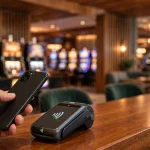
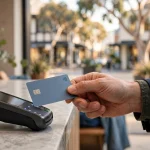
In Australia, paying by card is less a special choice than part of the ordinary rhythm of shopping. Contactless credit and debit cards are accepted almost everywhere, making a quick tap familiar across daily transactions. Mobile wallets, including Google Pay and Apple Pay, are similarly widespread. The plastic card has not disappeared; it has acquired a digital companion.
That familiarity helps explain why payment methods can seem interchangeable in everyday life. People move between cards, phone wallets and services connected to bank accounts, such as PayPal, according to the setting. The habit is practical rather than ideological: the same person may tap a card at one counter and use a phone or bank-linked service elsewhere.
Casinos That Accept PayPal in Australia: What to Know
A cashier at an online service is a different kind of setting. A payment method’s familiarity in shops does not establish that a particular website accepts it. Nor does the everyday presence of bank-linked services answer whether a site supports CashtoCode. National payment habits describe what people know how to use; they do not certify a merchant’s options.
That distinction can be easy to miss. A method may feel familiar because it belongs to the wider payments landscape, while availability at any individual online service remains a separate matter. In this case, the Australian pattern is broad comfort with cards, mobile wallets and bank-linked payments—not evidence that every online cashier offers the same menu.
The contrast is revealing. Modern payment culture encourages movement between channels, but acceptance is still decided at the point where a transaction is made. Familiarity travels widely. Merchant support does not.
Paying by Card: Acceptance Can Still Be Conditional
A payment logo is not a promise that every transaction will pass. A specialist affiliate review has reported that some online casinos do not accept Amex, but that observation is time-sensitive and cannot be treated as a settled description of the market. Acceptance can depend on the operator’s cashier and the rules applied to a particular payment route.
There is another gate beyond the casino’s own settings. Australian banks may block gambling-related Amex transactions at the issuer level. A payment can therefore be unavailable even when a site appears to support the card. The distinction matters: the operator’s stated options and the issuer’s decision are separate parts of the same attempted transaction.
That comparison does not establish anything about CashtoCode. A card and a voucher-based payment method are not interchangeable merely because both may appear in a cashier. Card acceptance says nothing about whether a particular service accepts CashtoCode, and it cannot confirm that a CashtoCode payment would be allowed or processed. The cashier’s labels alone do not settle the matter.
Casinos That Accept Neteller in Australia: What to Know
There is a wider legal boundary. Under the Interactive Gambling Act 2001, operators may not provide real-money online casino games to people in Australia; the Australian Communications and Media Authority enforces the law. Offshore use does not make the arrangement locally regulated, and Australian consumer law does not protect people using offshore casinos. That context is not a payment inconvenience. It changes what assurances are available.
The card comparison is therefore narrow: Amex acceptance can vary, and a bank may stop a gambling-related transaction. Neither point is evidence for or against a CashtoCode casino payment method. A familiar payment symbol cannot do the work of proof.
Bonus Claims Need Evidence, Not a Payment-Method Label
A payment method and a bonus are separate matters. A reference to CashtoCode alongside a casino promotion does not, by itself, show that an offer exists, who can use it or what conditions apply. The label is not the offer.
That distinction matters because bonus language can make a payment route sound like an invitation. Yet a headline cannot establish eligibility, qualifying deposits, wagering conditions or withdrawal rules. Without clear terms attached to a specific offer, claims linking CashtoCode with casino bonuses should not be treated as proof that any such promotion is available. No flourish can substitute for the terms.
In Australia, there is a more fundamental boundary. The Interactive Gambling Act 2001 prohibits operators from offering online casino games to people in Australia. It does not explicitly make players’ use of offshore sites a criminal offence, but that distinction does not turn an offshore promotion into a locally authorised service. Australian consumer law does not protect players who use offshore casinos.
Bonuses are not detached from the services they promote. When the underlying offer concerns real-money online casino games, promotional wording does not alter the legal position. A CashtoCode mention cannot establish that an offer is lawful for Australians, or that a player would have the protections associated with a locally regulated product. There is no local regulated online-casino framework to lend such a claim that meaning.
The careful reading is a modest one: treat payment claims and promotional claims as different claims, and do not infer bonus availability from a payment-method name. A label is not a contract.
How do you check if casino sites accept Amex deposits?
Check the casino’s cashier for American Express as a deposit option. Some casinos do not accept Amex, and availability can vary.
Are casino Amex payments instant?
Yes, Amex deposits at casinos are processed instantly. Withdrawals can take up to five days to clear.
Why does my Amex deposit get declined at some casinos but not others?
Amex may block payments to particular websites, and Australian banks may also block gambling transactions on Amex cards. Some casinos do not accept Amex in the first place.
Do I need to verify my American Express card before using it for online casino transactions?
Casinos typically require customers to complete a Know Your Customer assessment before making financial transactions.
How can I know if an online casino will accept American Express?
Look for American Express in the casino’s cashier or deposit information. Some casinos do not accept it, so check that it is listed as an available deposit method.
How long do Amex casino deposits take to process?
Amex deposits are processed instantly.
Payments

Anonymous Crypto Casinos in Australia: Fees and Access
Bitcoin and other crypto options bring payment, privacy and access trade-offs for Australian casino users....

Aristocrat Online Pokies in Australia: What’s Verifiable
Brand names and casino listings alone do not establish a game's origin, online availability, or...

Aussie Crypto Casinos: Payments, Risks and Rules
A practical look at payment choices, operator boundaries, promotional terms and the limits of claims...

New Australian Online Pokies: Legal and Payment Checks
A practical look at legal limits, verification, bonus conditions and payment issues surrounding offshore real-money...

Online Casino Payment Methods for Australian Players
Payment options differ in how deposits are accepted, withdrawals are handled and funds move between...

Online pokies in Australia: what “best-paying” means
A practical guide to interpreting payout claims, distinguishing free play from real-money play, and understanding...

Bitcoin Pokies in Australia: Payments and Risks
Bitcoin is a payment method, not a feature that defines a game's software or outcome;...

Casino Sites That Accept Amex in Australia
Amex availability can depend on the casino, payment provider, card issuer and transaction, while withdrawals...

Casino sites that accept BPAY in Australia: what’s known
Australian payment language does not establish that a casino is locally authorised or that BPAY...

Australian casino sites that accept credit cards
Card acceptance can enable a deposit, but it does not establish that an offshore casino...

Casino Sites That Accept EcoPayz in Australia: Key Checks
EcoPayz availability, cashier terms and withdrawal timing do not establish that an offshore casino may...

Casino Sites That Accept Osko in Australia: Evidence
The article distinguishes Australian casino terminology from payment evidence, including why a search phrase alone...
Paysafecard at Australian casino sites: what is verified
Mentions of Australian pokies, local payment preferences and cashier options do not by themselves establish...

Skrill for Australian Casino Sites: What Can Be Verified
Skrill acceptance is specific to an operator and transaction, while Australian rules place responsibility for...

Trustly casino sites in Australia: checking claims
Everyday payment habits and a Trustly label do not, on their own, confirm that a...

Under-an-hour casino withdrawals in Australia
PayID can move a released payment promptly, but the casino’s review and decision to release...

No-Verification Casino Withdrawals in Australia
Registration claims do not settle cashout rules: identity checks, payment processing and bonus conditions can...

Casinos That Accept Apple Pay in Australia
Australian contactless habits do not establish which online casinos accept Apple Pay or what their...

Casinos That Accept Bitcoin in Australia: Rules & Risks
Bitcoin can change how deposits and withdrawals work, but it does not make an offshore...

Casinos accepting Bitcoin Cash in Australia: a guide
BCH is a payment method, not a legal exemption; offshore access, game availability and withdrawal...

Casinos That Accept Ethereum in Australia: What’s Verifiable
Ethereum may offer fast, low-fee transfers in general, but that does not confirm availability or...
Casinos That Accept Google Pay in Australia
Familiarity with mobile wallets does not prove an online casino accepts Google Pay or supports...

Casinos That Accept Litecoin in Australia: Legal Limits
The law, payment claims and account checks are considered separately, since accepting Litecoin does not...

Casinos That Accept Mastercard in Australia
Everyday card use in Australia does not establish which online casinos accept Mastercard or whether...

Casinos That Accept MiFinity in Australia: What to Know
Payment acceptance cannot establish whether an offshore casino may legally offer real-money games to people...

Casinos That Accept Neosurf in Australia: What to Check
A search result or casino label alone cannot establish Neosurf availability, permitted use, or withdrawal...

Casinos That Accept Neteller in Australia: What to Know
A careful look at how Neteller, pokies, Australian audiences, deposits, withdrawals and bonus claims are...

Casinos That Accept PayID in Australia: What to Check
The article examines the limits of evidence on PayID acceptance, deposits and withdrawals at casino...

Casinos That Accept PayPal in Australia: What to Know
PayPal availability, withdrawal options and a site's legal status are separate questions when assessing Australian-facing...

Casinos That Accept POLi in Australia: Legal Limits
Payment-menu claims do not establish legality, and the available evidence does not confirm whether casinos...

Casinos That Accept Tether USDT in Australia
The article distinguishes general crypto-payment claims from what is known about Tether, casino terms and...

Casinos That Accept Visa in Australia: What to Know
Visa's everyday use in Australia does not establish casino acceptance, withdrawal processing, or the legality...

Dragon Link Online Pokies in Australia: Bitcoin Context
A pokie describes a digital slot game, while Bitcoin describes a payment method; the name...

Easy Withdrawal Casinos in Australia: How Payouts Work
Withdrawal speed depends on operator approval as well as the payment method, and Australian law...

Fast Withdrawal Casinos in Australia: Payment Routes
Withdrawal timing depends on casino processing as well as the payment network, while limits, fees...

Instant Bank Transfer Casinos in Australia
Bank transfer options can differ in how they fund an account, handle withdrawals and fit...

Real-Money PayID Withdrawals in Australia: How Fast?
PayID can move bank-to-bank payments in real time, but the operator must release a withdrawal...

Instant PayID Withdrawals in Australia: How They Work
PayID can move released funds in real time, but casino reviews, first withdrawals and wagering...

PayID Pokies in Australia: Payments and Legal Context
The guide distinguishes payment mechanics from legality and explains deposits, withdrawals, limits and bonus conditions...

No-KYC Casinos in Australia: Checks and Payouts
The label may describe signup, but it does not rule out identity checks when a...

Online Pokies Instant Withdrawals in Australia
A withdrawal depends on operator checks and release as well as the speed of the...

Online Pokies PayID in Australia: How Payments Work
PayID is an identifier used through the New Payments Platform, but acceptance alone does not...

Pay by Phone Casinos in Australia: PayID Explained
The guide distinguishes carrier-billed charges from bank payments and explains why payment approval, bonuses and...

Quick Casino Withdrawals in Australia: How They Work
Payment speed depends on the transfer method, casino terms, identity checks and whether a deposit...

Real Cash Online Pokies in Australia: Bitcoin Play
Bitcoin changes how deposits are made, but game credits, bonus terms and offshore protections determine...

Safe Online Pokies in Australia: What Safety Means
The guide separates account and payment safeguards from legal status, and explains Bitcoin transfers, offshore...

Same-Day Casino Payouts in Australia: The Process
A withdrawal moves through operator checks and payment rails, so “same day” may describe release...

Solana Casino Comparison for Australia
Follow the exchange-to-wallet path and assess legal uncertainty, bonus terms, token exposure and withdrawal conditions....